Stepping into the job scene as a teenager might feel overwhelming, especially with little to no work history. If you’re drawing a blank on how to put together a resume for teens, you’re not alone. This article is here to help, offering simple tips and examples that’ll guide you in creating a resume that shines, even if it’s your first.
The Modern Job Market for Teens
Teenagers seeking jobs today face a different landscape than previous generations did. With the digital age in full swing, there’s a new playground that’s opened up.
Evolving Job Market
Today’s job market has seen a significant evolution. Gone are the days when teens were limited to jobs at local stores or summer camps. The digital revolution has ushered in opportunities in the form of remote work and participation in the gig economy. Whether it’s freelance writing, graphic design, or even virtual assistance, the horizon has expanded tremendously for teens.
Digital Presence & Resumes
Having an online presence is almost as crucial as having a well-crafted resume for teens. Just as a resume showcases your skills and achievements, online platforms, such as personal websites, LinkedIn profiles, and even certain social media accounts, act as an extension of this presentation. It’s where potential employers or educators can get a holistic view of who you are, both as a potential employee and as an individual.
Crafting a Professional Online Image
- Professional Profile & Headshot: Just as a resume needs to be polished, so does your online image. Start with a clear, professional headshot. This doesn’t necessarily require hiring a professional photographer; even a well-lit, high-quality photograph against a neutral background can work wonders.
- Bio/Summary: Draft a brief bio or summary focusing on your main interests, strengths, and future aspirations. This isn’t a space to be overly formal but be succinct and genuine. Let it reflect who you are and where you see yourself in the future.
- Engage with Relevant Companies: Identify and follow organizations or companies in fields you’re passionate about. This will not only keep you informed about the latest trends and job opportunities but will also demonstrate your genuine interest in that domain.
- Recommendations: As you build connections, don’t hesitate to ask for recommendations or endorsements, especially from individuals you’ve worked with or under whose guidance you’ve achieved something notable. These serve as testimonials, lending credibility to your skills and achievements.
To sum it up, today’s job market for teens is a blend of the traditional and the digital. By combining a well-prepared resume with a thoughtful online presence, teenagers can stand out and make their mark in this evolved job environment.
Teen Resume Template
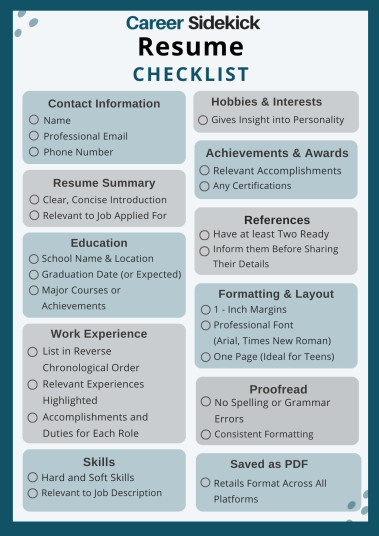
Mapping out a resume for teens can feel like a maze, but with the right structure, it can be simplified. Here’s a tailored template to guide teenagers in creating a resume that captures attention:
- Contact Information
- Resume Summary
- Education
- Work Experience
- Skills
- Hobbies and Interests
- Achievements and Awards
- References
1. Contact Information
Your contact details offer the first impression, even before face-to-face interactions.
- Name: Clearly state your full name. If common, include a middle initial, e.g., “James T. Kirk.”
- Phone Number: Provide a reliable contact, ensuring a professional voicemail greeting.
- Address: List your city and state, or a full address if comfortable.
- Email Address: Select a mature, straightforward email format, such as [email protected]. Avoid playful or quirky IDs.
This section is your gateway for potential opportunities, so it’s essential to appear polished and easily reachable.
2. Resume Summary
Your resume summary gives a quick overview of who you are and what you’ve achieved. Think of it as a brief snapshot of your abilities and goals.
- Introduction: Begin by identifying yourself. For instance, you might be a “committed high school junior” or a “tech-focused sophomore.”
- Your Achievements & Experiences: Reflect on what you’ve accomplished so far, even if it’s just within school or your local community. This can range from leading a successful school project to mastering a difficult subject or skill at home.
- Connect With Your Desired Role: Make sure that what you mention aligns with the job or position you’re aiming for. This shows that you understand what’s expected and that you’ve prepared yourself for it.
- State Your Goals: This is where you mention what you want to achieve, be it learning new skills, gaining work experience, or exploring a particular interest further.
Example Summaries:
“High school junior deeply involved in environmental projects. Successfully headed the school’s Earth Day event. Aiming to apply and grow these organizational skills in an environment-focused role.”
“Math-loving senior who’s excelled in advanced courses. Participated in school budgeting activities. Seeking an opportunity to further explore the world of finance and accounting.”
“Computer-savvy teen with experience in coding simple applications. Completed an online course in app development. Eager to contribute and enhance tech abilities in a related job setting.”
Your summary is essential. It’s the first main thing people read about you, so make sure it tells them about your strengths and how you want to use them in the future.
3. Education
Your education section shines a spotlight on your academic achievements and the courses you’ve taken that make you a fit for the job or opportunity you’re seeking.
- High School & Graduation Year: Start by stating the name of your high school and the year you’re set to graduate. This gives a clear picture of where you are in your academic journey.
Example:
“Springfield High School, Expected Graduation: 2026”
- Courses & Certifications: Here, highlight any courses that are relevant to the role you’re applying for. Also, if you’ve taken any additional certifications—like first aid or computer programming—this is the place to mention them.
Example:
- Achievements: Your academic accomplishments can be an asset, showcasing your dedication and hard work. Mention if you’ve consistently been on the honor roll, completed a standout project, or participated in any school-wide competitions.
Example:
“Achievements: Honor Roll for 3 consecutive years, Winner of the School Science Fair (2024), Lead Organizer for School’s Annual Charity Event.”
By neatly listing out these details in the education section of your resume for teens, you effectively communicate your academic foundation and the extra efforts you’ve put in during your school years.
4. Work Experience
The work experience section paints a picture of your real-world exposure, even if it seems minor or unrelated. Remember, every experience teaches something, whether it’s time management, responsibility, or teamwork.
- Part-time Jobs & Internships: Begin with any formal roles you’ve held. Include the job title, company or organization name, and the dates you worked there.
Example:
“Cashier, Green Grocer Shop, June 2022 – August 2022”
- Volunteer Roles: Volunteering can be as valuable as paid work. Mention any initiatives or community projects you’ve been a part of.
Example:
“Volunteer, Springfield Animal Shelter, September 2022 – December 2022”
- Minimal Formal Experience: If you haven’t had traditional jobs or internships, that’s okay! Teens often start with informal roles.
- Extracurricular Activities: Being part of a school club, sports team, or drama group can showcase teamwork, dedication, and other valuable skills.
Example: “Member, School Debate Team, 2021-2022” - Job Shadowing: If you’ve spent a day or more observing a profession, it shows curiosity and a proactive approach.
Example: “Shadowed, Springfield Town Hospital’s Pediatric Department, January 2023” - Tasks & Odd Jobs: Babysitting, lawn mowing, or dog walking may seem mundane but highlight a sense of responsibility.
Example: “Babysitter, neighborhood kids, various weekends 2022”
- Extracurricular Activities: Being part of a school club, sports team, or drama group can showcase teamwork, dedication, and other valuable skills.
In crafting a resume for teens, the objective is to convey reliability, growth, and a willingness to learn. Your experiences, no matter how big or small, contribute to that image.
5. Skills
Skills are the tools in your toolkit that make you valuable in different settings, from the classroom to the workplace. As a teen, you might be surprised at the range of skills you’ve already developed.
- Hard Skills: These are specific, teachable abilities or skill sets you can quantify. Most often, you’d gain these from classes, online courses, or even hobbies.
- Foreign Language Proficiency: Being bilingual or even having basic knowledge of a second language can be a huge asset.
Example: “Fluent in Spanish, Basic knowledge in French.” - Basic Coding: In this digital age, understanding even the basics of coding can set you apart.
Example: “Familiar with Python and HTML.” - Graphic Design: If you’ve dabbled with design tools or taken a class, don’t hesitate to list it.
Example: “Proficient with Adobe Illustrator.”
- Foreign Language Proficiency: Being bilingual or even having basic knowledge of a second language can be a huge asset.
- Soft Skills: These are the personal attributes that enable you to interact harmoniously and effectively with others. They are often inherent and fine-tuned through experiences.
- Teamwork: Have you been part of group projects, sports teams, or clubs? This demonstrates your ability to work collaboratively.
Example: “Experienced in collaborating with peers in school projects and sports teams.” - Problem-Solving: This skill can be showcased through various instances, like finding a solution to a challenge during a school event.
Example: “Handled scheduling conflicts during the school fest by creating a new event timetable.” - Communication: Effective communication is crucial. This can be both written, like in essays, and verbal, like during class presentations.
- Example: “Gave multiple presentations in school and wrote articles for the school magazine.”
- Teamwork: Have you been part of group projects, sports teams, or clubs? This demonstrates your ability to work collaboratively.
When creating a resume, it’s essential to recognize and present both hard and soft skills. These, combined with your education and experiences, form a comprehensive picture of what you bring to the table. To get a comprehensive understanding of what you can do in this section, review more examples of resume skill sections.
6. Hobbies and Interests
Going beyond academics and work, the hobbies and interests section offers a unique window into who you are as an individual. It highlights your passions and showcases additional facets of your personality that might resonate with potential employers or institutions.
- Sports: Active involvement in sports indicates discipline, teamwork, and often, leadership skills.
Example:
“Varsity Basketball Player – Led the team as captain in 2022 and won the inter-school championship.”
- Music: Whether you play an instrument, sing, or even just appreciate certain genres, music can communicate dedication, creativity, and cultural awareness.
Example:
“Violinist – Played in the school orchestra for three years and performed in multiple concerts.”
- Arts: This could be anything from painting and drawing to drama. Artistic pursuits indicate creativity, patience, and a unique way of viewing the world.
Example:
“Drama Club Member – Acted in two school plays and helped with set design.”
- Crafts: Engaging in crafts suggests attention to detail, persistence, and sometimes, entrepreneurial spirit.
Example:
“Handmade Jewelry – Craft and sell necklaces and bracelets at local craft fairs.”
While this section might seem less formal, it’s integral to a holistic resume for teens. The activities you pursue in your free time can often provide valuable insights into your character, work ethic, and personal strengths. It allows potential employers or educators to see you as a well-rounded individual, not just a list of achievements.
7. Achievements and Awards
This section magnifies the moments where your dedication, skills, and efforts were recognized. It’s a testament to the hard work you’ve put into both your academic and extracurricular endeavors, helping to distinguish you from your peers.
- Academic Accomplishments: Recognition received for outstanding performance in school subjects or projects.
Example:
“Gold Medalist – Springfield High Math Olympiad 2022.”
- Extracurricular Recognition: Awards or commendations received outside of the regular curriculum but within the school environment.
Example:
“First Place – Schoolwide Poetry Slam 2023.”
- Competition Wins: Taking part in competitions, whether local, regional, or national, showcases your commitment and expertise in a specific field.
Example:
“Winner – Regional Science Fair 2023 for a project on sustainable energy.”
- Special Recognitions: These can be from outside of school, such as community awards or recognitions from workshops you’ve attended.
Example:
“Community Service Award – Recognized for 100+ volunteer hours at the Springfield Community Center in 2022.”
- Leadership Roles: If you’ve been entrusted with leadership positions, it’s worth mentioning as they underline qualities like responsibility, management, and guidance.
Example:
“Student Council President 2022-2023 – Led a team of 15 council members in organizing school events.”
In crafting a resume for teens, it’s vital to illuminate these achievements as they vouch for your capabilities and drive. They’re solid proof points of your dedication in various fields, making your application stand out. If you are still confused about how you should list your accomplishments, our guide will help you out!
8. References
References act as a bridge between you and potential employers or educational institutions. They vouch for your character, skills, and the authenticity of your accomplishments, providing an external voice that supports your claims.
- Character References: These individuals can speak about your personal qualities, work ethic, and attitude. They’ve seen you in action, whether in the classroom, in clubs, or during school events.
Example:
“Mr. John Doe, English Teacher, Springfield High. Witnessed my growth as a writer and communicator over two academic years.”
- Club Advisors and Coaches: If you’ve been active in extracurriculars, mentors from these activities can offer insights into your leadership, teamwork, and dedication.
Example:
“Ms. Jane Smith, Debate Club Advisor, Springfield High. Supervised and guided me during various inter-school debate competitions.”
- Professional References: For those who’ve dipped their toes into the work world, whether it’s a part-time job, an internship, or volunteering, references from these arenas are invaluable.
Example:
“Mrs. Emily Brown, Manager, GreenCafe. Oversaw my tasks during my summer job where I managed inventory and assisted customers.”
Always remember to ask for permission before listing someone as a reference. Inform them about the role or opportunity you’re applying for, so they’re prepared to give relevant insights if contacted.
In essence, a reference section complements the rest of the resume for teens. It doesn’t just vouch for what you’ve achieved but more importantly, how you’ve achieved it and the impact you’ve made. While it’s crucial to have a well-structured and informative resume, it’s equally important to show that you’re a passionate individual ready to grow and contribute. With this balanced approach, you’re sure to make a lasting impression.
How to Format a Teen Resume
Presenting your skills, experiences, and achievements in a structured and visually appealing manner is crucial. Here’s a guide on how to format a resume for teens, ensuring it stands out and leaves a lasting impression.
1. Functional Resume Format
A functional resume emphasizes skills and achievements over chronological work history. This format is ideal for teenagers as it allows you to spotlight your strengths and relevant experiences, even if you don’t have an extensive employment history.
Why It Works for Teens: The functional format is suited for those with minimal experience because it allows you to focus on your skills and potential. Instead of listing jobs in order, you’ll be showcasing qualities and achievements that make you a desirable candidate.
2. Visually Appealing Layout
Your resume should be easy to read and navigate. A clean layout ensures the hiring manager or reviewer can easily spot essential information.
- Font & Size: Stick to professional fonts like Arial or Times New Roman, usually in sizes 11 or 12. These fonts are universally recognized and easy to read.
- Font Color: Always use a black font color. It’s classic, formal, and readable in both print and digital forms.
- Bullet Points: Use bullet points to list skills, experiences, or achievements. It helps in breaking up large chunks of text, making the document more scannable.
- Concise Professional Language: A resume for teens should be straightforward and to the point. Avoid jargon or overly complex terms.
3. Page Margins and Length
When setting up your resume, use spaces (margins) of about 1 inch on all sides; this makes your page look clean and organized. For most resumes, especially for teens, sticking to a one-page resume is a good idea. It’s long enough to show off what you can do but short enough to keep the reader’s interest.
4. Save as PDF
Always save and send your resume as a PDF. This format ensures that the layout, fonts, and formatting remain consistent, no matter where or how it’s viewed. Moreover, a PDF is universally accessible and maintains the integrity of your document.
Formatting plays a significant role in ensuring that your resume isn’t just informative but also engaging. By following these guidelines, teens can present a resume that reflects professionalism, attention to detail, and genuine enthusiasm for the opportunities they seek.
Tips for Writing a Resume as a Teenager
Crafting a stellar resume as a teenager might seem challenging at first. However, by adopting a strategic approach and being attentive to details, you can create a resume that resonates with potential employers. Here are some vital tips to guide your resume-writing journey:
Read the Job Description Carefully
When you look at a job description, pay attention to specific words they use to describe the skills and experiences they’re looking for. These are called keywords. By including these keywords in your resume, you show potential employers that you’ve paid attention to what they want and that you might be a good fit.
Seek Feedback
It’s always a good idea to get a second pair of eyes on your resume. Talk to trusted adults, like teachers, family friends, or mentors, and ask them to look over your resume. They might give you helpful advice on making it better or point out things you missed.
Proofread for Errors and Clarity
Mistakes on a resume can make it look like you didn’t care enough to check your work. Before you send it off, read through it a few times. Look for spelling mistakes, grammar issues, and places where things might be confusing. This shows potential employers that you’re careful and pay attention to details.
Wrapping up, remember that lack of formal work experience doesn’t limit your opportunities. Many roles are perfectly tailored for teenagers. Interested in exploring further? Dive into our articles on summer jobs and internships for teens to kickstart your journey.