Every January, heads of state, CEOs and investors gather in Davos, a small town in the Swiss Alps, for the World Economic Forum’s annual meeting. Ahead of the 2025 meeting, the Forum published its five-year labor-market forecast: 170 million new jobs worldwide, and 92 million gone.
Before it became the capital of forecasts, Davos was a health resort. In the second half of the 19th century, when tuberculosis was among the most common causes of death in Europe, patients came from across the continent. They stayed months or years in sanatoriums, part hospital and part hotel, and spent most of the day lying on open balconies in the cold mountain air, which doctors then considered a cure. Thomas Mann visited his sick wife at one of them and turned the visit into his novel The Magic Mountain.
The cure came from somewhere far less pastoral. In 1943, researchers in a New Jersey lab isolated streptomycin, an antibiotic made by a soil bacterium. Within a decade, with the drugs that followed, doctors could cure tuberculosis without sending anyone up the mountain. No machine replaced the tuberculosis doctors of Davos. Their patients stopped coming, the sanatoriums became hotels, and today some of the Forum’s guests sleep in them.
If you’ve rolled your eyes at yet another column on AI and doctors, you have good reason, and this one could easily have been another. In these columns, someone announces that doctors are about to disappear, someone else that we need them more than ever, and both assume, without noticing, that there are only two answers (automation or the status quo) and that what the machine can do will decide between them.
Behind all this sits an even bigger promise: that the world’s demand for doctors will change from the ground up. We have heard that promise before, right after the drugs that emptied Davos. After penicillin and streptomycin, doctors came to believe the era of infectious disease was ending. Macfarlane Burnet, an Australian virologist and Nobel laureate, wrote that writing about infectious diseases had become almost a matter of writing history. Then came AIDS and antibiotic-resistant bacteria. Medicine did change, though not the way doctors expected. The sanatoriums closed, yet infectious disease medicine, the specialty that was supposed to vanish, became a recognized field in the very years after its obituary.
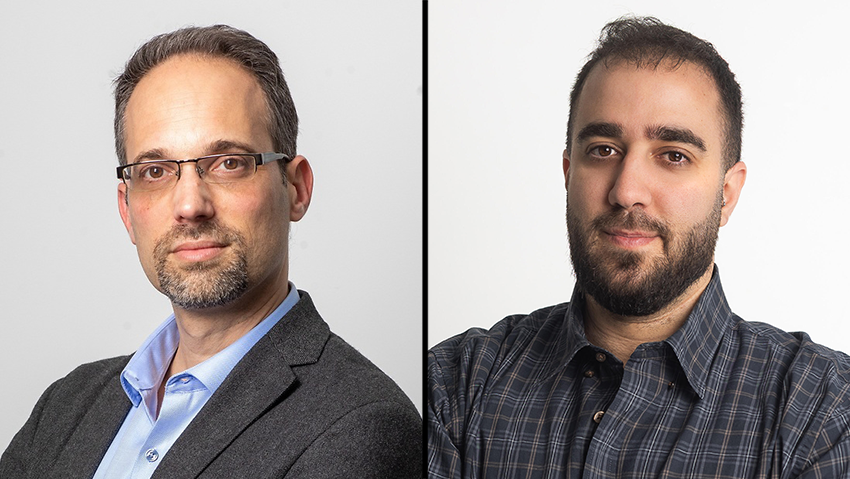
Prof. Ran Balicer, Dr. Dean Ariel
(Photo: Liel Zand, Tal Shahar)
We have signed a few obituaries ourselves. About thirty years ago, one of us (Balicer) wrote in a chapter of his book Medicine and the Internet that doctors’ monopoly on information was ending: the internet would give patients knowledge locked away in textbooks, jargon and Latin, and reshape the doctor-patient relationship. In practice, the change came slowly. This year, the other of us (Ariel) argued in the New England Journal of Medicine that the monopoly still stands and keeps eroding, and that language models are speeding up a process that search engines and smartphones began long before them. The profession will probably keep changing, and faster. But do the dramatic forecasts from Davos apply to doctors?
Sometimes the obituary is right. For decades, “computer” was a job title for people, mostly women, who calculated artillery firing tables and rocket trajectories by hand. Machines did the work faster and cheaper and took their jobs. Later they took the name too.
Elevator operators fared better. Self-service elevators existed by around 1900, yet operators lasted decades longer because people refused to step into an empty car. In the end, they brought it on themselves. In 1945, New York’s elevator operators went on strike, the city ground to a halt, and the strike cost it an estimated $100 million in tax revenue. The elevator industry took the hint and ran ads showing children pressing the buttons and grandmothers riding alone. Within a generation, almost no operators remained.
The latest ceremonial obituary from a Nobel laureate went to radiologists, the doctors who read X-rays and scans. In 2016, Geoffrey Hinton, one of AI’s pioneers, said we should stop training radiologists, since within five years AI would do their job better. Around the same time, we were also told that the age of driving was ending and that by 2020 we would all be relaxing in self-driving cars. Instead, demand for radiologists has hit an all-time high.
The Mayo Clinic, for example, has since grown its radiology staff by 55%, even as it runs more than 250 AI models. Some say Hinton was right and only his timeline was too optimistic. Meanwhile, as a recent joke goes, the only thing we’re seeing is traffic jams of radiologists driving themselves to the hospital.
These obituaries often fail for a mundane reason that economists insist on calling a paradox: when something gets easier and cheaper, people use more of it. In the early 1990s, surgeons switched gallbladder removal to laparoscopy, operating through a few small cuts in the abdomen. The operation got easier, hospital stays got shorter, and the cost per operation fell by about a quarter. At one American health plan, the operation rate rose by more than half within four years. Needless to say, the surgeons did not run out of work.
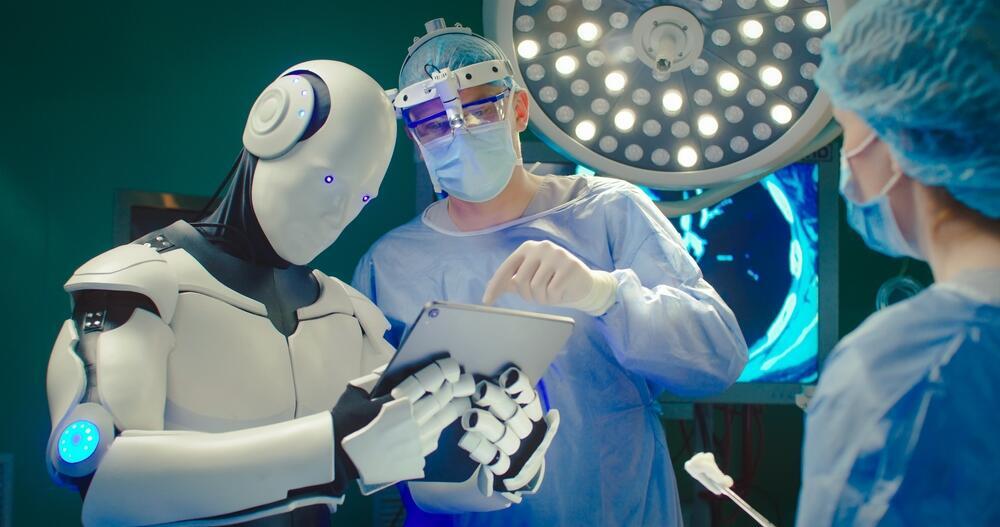
Will humanoids replace surgeons in the future?
(Photo: shutterstock)
If history is any guide, this time too the outcome will turn on questions far duller than the tests in which software beats doctors. Who pays for a visit in which the machine did half the work? Who is to blame when it gets something wrong? Will an 80-year-old patient agree to hear her diagnosis from a chatbot or a virtual agent? In Israel, where nearly all public medicine runs through four health funds (Israel’s HMOs) and one Ministry of Health, these decisions will be made in a handful of meeting rooms, long before the newspapers finish arguing.
So, will AI replace doctors? It may do to some of them what machines did to the women who calculated firing tables. It may also raise demand for them, as laparoscopy did for surgeons, or give rise to new specialties, the way infectious disease medicine took shape after the diseases were declared beaten. Any of these could take ten years, or fifty, as with the elevator operators. And if AI ever makes a whole medical field unnecessary, it may happen the old way, the Davos way: it will help find a cure, and the patients will stop coming. Which field, and when? No one knows, in medicine or in any other profession. As usual, the obituary will be written after the fact.
Dr. Dean Ariel is a family medicine resident in Clalit Health Services’ Tel Aviv district and a PhD student at the Stein Faculty of Computer and Information Science, Ben-Gurion University of the Negev. Prof. Ran Balicer is Chief Innovation Officer and Deputy Director General of Clalit Health Services, a former member of the UN High-Level Advisory Body on Artificial Intelligence, and chair of the National Health.AI Summit, to be held January 20 in Tel Aviv.