Democrats have seized control of Congress. Reality—intruding rudely on the dismantling of the public sector and visions of an AI-powered corrupt, oligarchic dystopia—has swung political momentum against Trumpism. Reform is in the air. We are in a two year sprint to the presidential election, and the possibility that Democrats can retake full power over the federal government and begin to reverse the damage that has been done over the past decade.
Now is the time for big ideas. Now is the time for vision. Regardless of the fact that the lame duck president may sit there and veto things, or lash out with extreme measures as he sees his time winding down, nothing can stop 2028 from arriving. When it does, the Democrats should already have the electorate primed to think about policies that are strong enough to remedy the structural flaws—wealth flowing upward that increases inequality, money’s influence in politics, anti-democratic flaws like gerrymandering and voter suppression and the Electoral College and the Supreme Court. You want alignment between the hunger of voters for genuine reform and the political momentum necessary to achieve it.
With this in mind, you are already seeing proposals like Supreme Court expansion and DC statehood and undercutting the Electoral College being touted in earnest. We can’t pass them now, but if we are in the position to pass them in two years, you want the public to be used to the ideas. You want to get them out and discuss them and have them absorbed into the discourse so that they are not a shock to anyone. We’re in agenda-setting season, baby. If you don’t get your ideas on the list right now, you might get left behind.
The Democratic economic agenda has unfortunately been branded as one of “Affordability,” which—while I understand the electoral appeal—is a frame more suited for Black Friday Deals than for Tearing the Aristocracy Limb From Limb. The good news is that class war is undisputably in the air. Even the normal-coded Democrats in the midterms, the ones happy to reject “socialism” on the campaign trail, were equally happy to run hard against billionaires in a more direct way than ever before. I would prefer a bit more love for the red flag of revolution, of course, but I’ll take it. Taking into account the full spectrum of elected Democrats, the soil is more fertile for substantial economic progressivism than it has been in my lifetime.
There is one genuinely transformative economic proposal that is not getting enough attention: A federal jobs guarantee. This idea—which would far eclipse a higher minimum wage or modest labor rights improvements in its impact—is languishing on the neglected edges of the national dialogue. It is a seed that has been planted in a shady spot. It exists, but it needs more sunlight if it is ever going to thrive.
The idea of a job guarantee is not new. Massive public employment was at the heart of the New Deal, and the right to employment was at the top of FDR’s “Second Bill of Rights” in 1944. In the past decade, the idea has been revived in earnest on the left. It’s been floated since at least 2018 as a counterbalance for a host of economic ills. (And it would have come in pretty fucking handy when Covid hit. Oh well.) Ayanna Pressley introduced a resolution in Congress calling for it in 2021, and reintroduced it again just two months ago. Characteristically, Cory Booker has also introduced a more modest bill, calling for “a model federal jobs guarantee program in up to 15 high-unemployment communities and regions across the United States.”
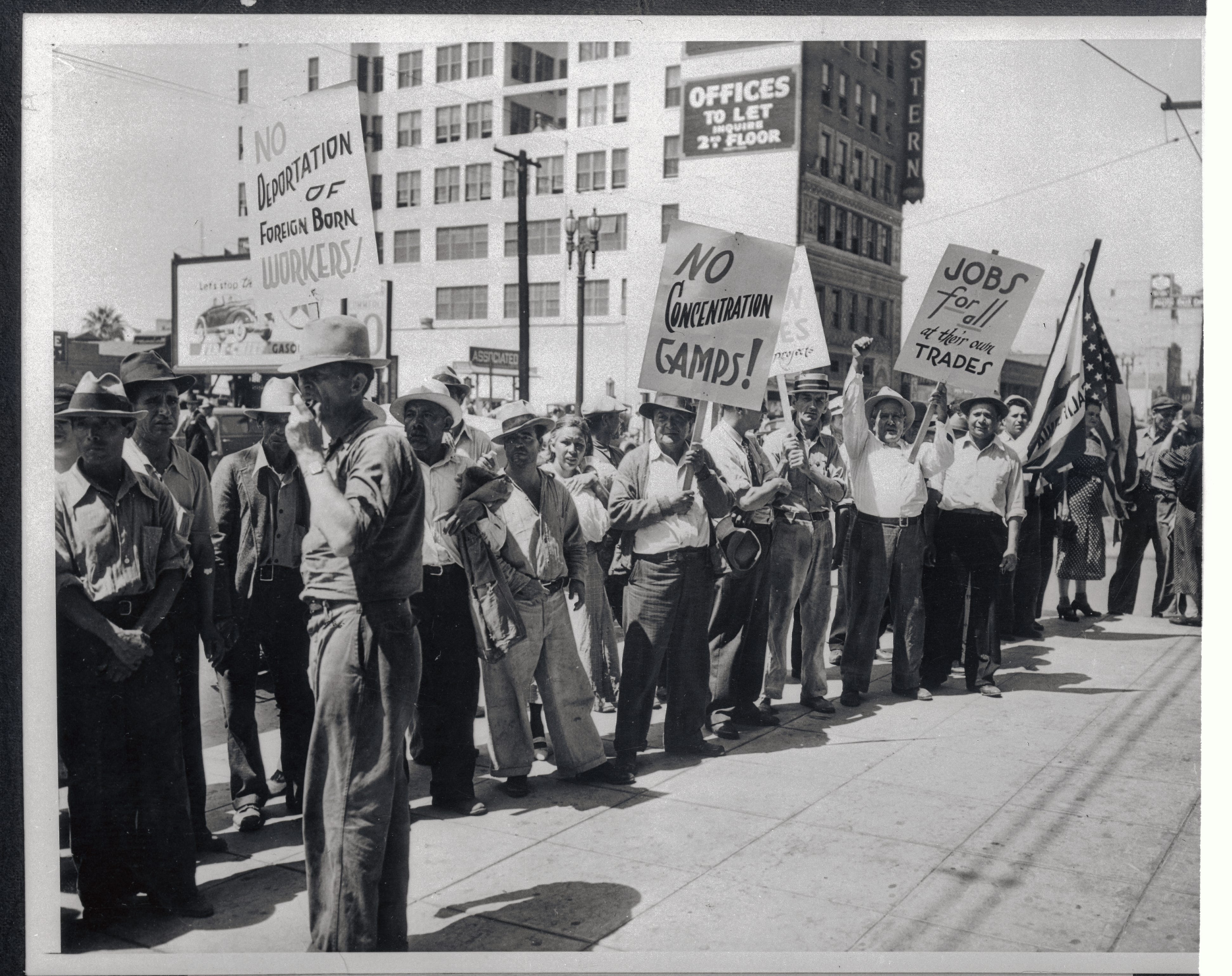
A federal job guarantee—as opposed to just tax credits or economic incentives for employment or a large but not comprehensive public jobs program—would have some very attractive effects on labor in America. It would set the floor for all employment nationwide. All jobs in the private sector would have to make themselves more attractive than the jobs that the government would offer to everyone, or nobody would take them. So the federal job wage would effectively be the new minimum wage, the federal job benefits package would effectively become the minimum that other jobs could offer, and so on. It would be the rough equivalent of a basic union contract for the entire workforce. It would accomplish in one fell swoop what a hundred lesser, more targeted measures tweaking labor power and wages would not.
It would also, of course, eliminate unemployment and raise wages at the bottom of the income spectrum, which would disproportionately benefit the neediest and most discriminated-against segments of the population. And think of all of the things that all of the people in these jobs could do. They could work in schools and hospitals, they could take care of elderly people and children, they could clean up public spaces, they could build roads and parks and public works, they could help with disaster recovery, they could work on farms, they could help with our green energy infrastructure, they could replicate a public art and writing programs a la the WPA. The program would go a long way towards filling in gaps where employers have cried about labor shortages, and it would also provide a significant labor force dedicated to public works and social programs without being constantly at risk of market-based cutbacks.
You can read some longer workups of potential program details, which were both done by economists in 2018, here and here. There are a couple of very predictable objections that you will hear to a federal jobs guarantee:
-
It will make it harder for private sector employers to hire: This is kind of the point! It will force private sector employers to offer better wages and benefits in order to hire. That is a feature, not a bug.
-
It costs too much: The actual “costs” of this program depend quite heavily on its design and on where you set its wages. But it would certainly cost the federal government hundreds of billions of dollars or more. However, the net “cost” of this program is not really that number. You have to balance it against the economic benefits the program would provide as well. Eliminating unemployment, reducing poverty, improving educational outcomes for children, improving public health, improving public safety, improving public transportation, improving the environment, improving infrastructure of all types, improving the level of care that elderly people and young children receive… all of these things are real costs that exist right now that this program would help to remedy. Often, the economic calculations that politicians throw around simply ignore some or all of these costs, or assign them lesser values than they deserve, and thereby cause the public to focus on how much government programs cost without reckoning with how much benefit they provide. As the economist Pavlina Tcherneva put it, “The costs of these social and economic ills—both in real and financial terms—are already ‘paid for’ by the economy and society at large.”
The political path to a jobs guarantee is, I think, much more promising in 2026 than it was in 2018. The most important reason for that is AI. Everyone is rightly freaking the fuck out that AI will cause unemployment to rise dramatically in the near future. (In fact, as economists and investors and AI companies themselves can tell you, AI has to automate a huge number of jobs in order for the industry to have any hope of recouping its enormous investments in the medium term.) This concern crosses all partisan and demographic boundaries. Are we as a nation ready for this distinct possibility? No. The pandemic revealed that our existing unemployment system is in shambles, and inadequate for a true crisis. Should we wait for the job losses to arrive before we hurriedly cobble together an emergency system for dealing with them? Or, wouldn’t it be better to craft a thoughtful safety net of guaranteed jobs planned to bolster our society and our economy before the crisis gets here?
Many in Silicon Valley and elsewhere have advocated a universal basic income as a safety net measure for when AI starts eliminating entire categories of employment. But many others have noted that, if UBI is our primary response, we would be left with millions of completely driftless citizens, with no jobs or purpose, surviving on barely adequate government handouts. It’s a recipe for despair and unrest, not to mention continued massive inequality. A jobs guarantee, on the other hand, gives people a purpose, bolsters our social programs and infrastructure, and strengthens the position of the working class in the labor market as a whole, besides. It is superior to a UBI even by conservative standards. Yes! The conservatives, who have been busily implementing draconian “work requirements” for poor people who receive government benefits—what is their brilliant plan for AI-fueled job loss? Just shrug at mass unemployment? Or grant a penurious drip of free government money to all? Or, perhaps, may we suggest: A federal jobs guarantee? That sounds like a timely plan, full of foresight and bipartisan appeal.
As progressives rush to get Medicare for All and the PRO Act and wealth taxes on the agenda for 2028, it would be a good idea to start reintroducing the public to the idea of a federal job guarantee as well. AI is gonna destroy your job but we are going to build a 21st century version of the WPA and make sure that you can get a job doing things that genuinely help make your country a better place—and that is also going to prevent the predatory big companies of today from using job automation as a way to crush the power of labor and prey on your desperation to push wages and working conditions down.
Sounds good to me.
-
Related reading: Can a Federal Job Guarantee Unite the Left? (2021); Enshittification Relies on Broken Economic Math; You Can’t Solve Half a Problem.
-
PHILLY: One week from today, on Monday, November 16, I’ll be appearing with a bunch of great writers at an event celebrating the 25th anniversary of Barbara Ehrenreich’s classic book “Nickel and Dimed.” Come out and see us at 5:30 PM at Public Trust in Philadelphia, or you can livestream the whole event right here. Before that, I’ll be covering the Majority Democrats MODERATE CONFAB in Denver later this week. Stay tuned.
-
It is too bad that we live in an age of AI centibillionaires and a flagging labor movement. I dislike that. Still, I have been able to continue making a living as a 100% independent journalist. How? Because of the support of readers just like you. If you like reading How Things Work and would like for it to continue publishing and remain paywall-free, PLEASE take a quick second right now and click the button below to become a paid subscriber. It’s just $6 a month or $60 for the whole year, and it keeps this whole thing going. You are all great people.