Graduates and students are having to scrap and hustle in a way that their predecessors did not.
“I still cut a lot of people’s hair for free – just because I can,” says Amy Kennedy, president of Trinity College Dublin Students’ Union.
Kennedy is in her fourth year of an English literature degree and part of a cohort of students who have watched their job prospects change considerably over the past couple of years.
Upon leaving school, she had considered a career in barbering – going as far as putting a deposit down on a training course.
Ultimately she didn’t take it up professionally and is set on a life in academia and publishing. But she believes so-called “side hustles”, such as cutting hair, may become increasingly necessary for her to make ends meet in the future.
“Many of the jobs I would have looked to in the past to sustain me when studying have kind of died. A lot of copy editing is now fed into chatbots – and fired back out.
“Creative writing is not something you can live off.”
In her role as student union president, Kennedy has encountered numerous students who have had to change their career direction due to the impact of AI. Many have had to pursue their own side hustles.
Kennedy says these tend to be physical roles that students feel are less likely to be replicated by AI at some point in the near future – such as carpentry. She mentions a law student who took an abrupt left turn and became a tattoo artist. Another has pursued a career repairing bicycles after their arts degree failed to land the job they thought it would.
“I have seen recent graduates really struggling,” she says. “People who came into college with the promise of a degree, who at the time of entry were really employable, are now struggling to get jobs. It is really hitting people from around my age to those around five years older.”
She reports that while some students are keen to use AI, there is a large cohort who are negatively disposed towards it – including herself.
“I don’t want a robot to do my reading for me – writing my poetry for me. Those are fundamentally human outlets. It dehumanises a lot of things.”
Does she regret pursuing a degree around which the options have seemingly narrowed?
“I love my course, I love my discipline,” she says. “AI didn’t dissuade me from doing my college course.”
David (not his real name) is a 23-year-old master’s student who recently experienced a one-way video job interview for the first time.
“When you don’t have an actual person there and you’re just staring at yourself – even if you are given two or three attempts to record your answers – it’s still quite an unnatural process,” he says.
David is part of the first generation of university graduates to experience the artificial intelligence recruitment process.
The emergence of the one-way video interview has been one of the main developments of recent years. This is a stage where candidates are presented with questions and then given a certain amount of time to record their answers.
No one is waiting at the other end of the line.
“Sometimes AI will transcribe and analyse your responses in these video interviews – which you are asked to give your consent to at the start,” he says. “But you’re not given the opportunity to speak to a real person.”
The one-way video interview is now regarded as a basic screening tool for many employers – letting AI handle the time-intensive business of talking to young graduates – and potentially get through a larger number of them than would be possible within traditional interview formats.
‘It feels like there has not only been a bit of a slowdown in graduate hiring – but a reduction in the number of programmes available’
Graduates are feeling their way through a new world in which new job seekers lean on AI to help them compose CVs and prepare for interviews, employers rely on AI to sift through vast amounts of applications – and all the while AI is whittling away at traditional entry-level roles in the workplace.
David is among hundreds of Irish postgraduates who spent the month of September applying for work programmes that will begin in September of next year.
He has submitted between 30 and 40 applications, running the gamut from general graduate programmes to consulting and business analyst positions.
AI is apparent at all stages of the job hunt – which can be an exhausting and lengthy process.
Getting to the point where he can actually speak face-to-face with a potential employer, and have the opportunity to “stand out from the others”, can be a torturous path, says David.
“I’ve only had one in-person interview so far,” he says. “There’s been a couple over the phone and two or three of the video interviews.”
There seems to be a standard procedure. First, the CV is submitted. Then, an online assessment follows. If successful, the candidate will typically proceed to a one-way video interview. If this is deemed satisfactory, a phone interview may follow. Then, if the candidate is seen as promising, they will get an actual sit-down, in-person interview.
[ How graduates can turn AI to their advantage in a job huntOpens in new window ]
Advocates of AI’s use in recruitment say less time is being wasted looking for suitable workers and it has improved the quality of candidates making it through to the latter stages. They also claim that the dispassionate eye of the machine sifts through prospective candidates without applying bias.
Although the use of AI to filter CVs and streamline the interview process is becoming prevalent, Irish employers still have some way to go to match its use by businesses in the United States and Asia.
In the US, it is not uncommon for people applying for a role to encounter a fully rendered AI “person” in a video interview – an avatar that apparently thinks and speaks for itself.
The tech firm Humanly is among those to have developed realistic-looking interviewers that conduct conversations with job applicants. It claims this approach is superior to simplistic chatbots and gets people to talk more deeply about their experience and expertise.
Many of those who have gone through such interviews report, however, that the AI can be unnerving and distracting. Some speak of the “uncanny valley” effect – where a fake human evokes an eerie and psychologically jolting sensation.

“There has been just one instance where it has happened here that I know of,” says Trayc Keevans – who oversees the research department at recruitment specialist Morgan McKinley.
“The candidate in that case went online expecting to meet a real person – so it was an unusual and uncomfortable experience for them.”
Keevans says the Irish recruitment experience to date has remained more “human-centric” than elsewhere – but that this could change in the coming years.
More than half of Irish employers are now thought to use AI when advertising new roles and bringing in staff.
“What is most common here is the use of AI in the parsing of CVs and the initial screening – followed by candidate sourcing,” she says.
[ The Irish graduate jobs most affected by AIOpens in new window ]
In some ways, Keevans suggests, it is the more widespread usage of AI in the crafting of CVs and the submission of applications that has driven the need for more AI on the side of the recruiter.
AI assistants enable young job seekers to quickly fire off tailored submissions to multiple employers.
“Candidates are using it more than companies at the moment,” she says.
“You are seeing a big increase in the volume of applications coming through to employers – and the authenticity of those CVs [is] open to question. All of that is creating more work for the employer and they are using AI to distil the applications.”
Keevans acknowledges that uptake of AI has been slower here in part due to concerns about its accuracy.
This can be apparent during the “parsing” of CVs.
“If the correct prompts are not used, you can miss some really good candidates. That can definitely happen,” she says.
This is a common refrain from new graduates. Many say companies are simply not getting back to them at all – and fear that the lack of human involvement means their qualifications and skills are being unfairly binned by software.
‘AI can make hiring faster and more efficient. But human judgment remains critical to understanding candidates’
— Chris Paye
However, Keevans says there are other reasons why graduates are not perhaps hearing anything back.
“There is a worry with applicants where they feel perhaps that the tailoring of their CV is not aligning with an AI algorithm – but it may be more a case that there is a question mark over the level of perfection of the CV – or that the actual competition for the role is very intense.
“You also have an increasing number of applicants applying for global roles. There has been a huge increase of international applicants in Ireland which is really flooding the process. There is more to work through”.
This is a trend new graduates will be familiar with; there are many more candidates than there are jobs or graduate programmes available.
A glance at the latest employment numbers might suggest that the much-feared AI jobs “apocalypse” has yet to really hit Ireland, but the figures do not relay the full picture.
New graduates, like David, report finding it difficult to land jobs that would have previously fallen easily into their lap.
“It’s been quite frustrating,” he says. “It feels like there has not only been a bit of a slowdown in graduate hiring – but a reduction in the number of programmes available”.
A recent letter to Irish Times education columnist Brian Mooney from a concerned parent stated: “My son recently graduated with a first-class honours business degree and anticipated starting his career journey, as many previous graduates have, with one of the big four consulting firms – Deloitte, PwC, EY or KPMG.
“Sadly, the demand for graduates seems to have been affected by the advances in AI, which seem to be resulting in significant cuts in graduate recruitment.”
Despite a general feeling of ill-will among many new graduates towards AI, it appears there is little way of avoiding it. For example, in the United Kingdom the civil service actively encourages applicants to deploy AI when drawing up their CVs and preparing for interviews.
A British civil service careers website says that when making a written application, AI can be used to help job candidates think about their “own personal leadership experiences” and help them to “improve how you present them”.
[ AI is turning Ireland’s graduate recruitment market upside downOpens in new window ]
It also recommends that applicants use the likes of Claude, ChatGPT and Gemini to come up with mock questions that they can expect to encounter in an interview scenario.
In a peculiar sense, instead of making the process less interpersonal, the advent of AI has put a greater emphasis back on the old-fashioned interview stage.
With so many candidate now using the same tools to craft their CVs, weeding out any potential bluffers from the pack now comes down to the questions on the day.
No longer able to use AI to refine their answers – and instead asked to think on their feet – candidates can expect a more rigorous approach from interviewers.
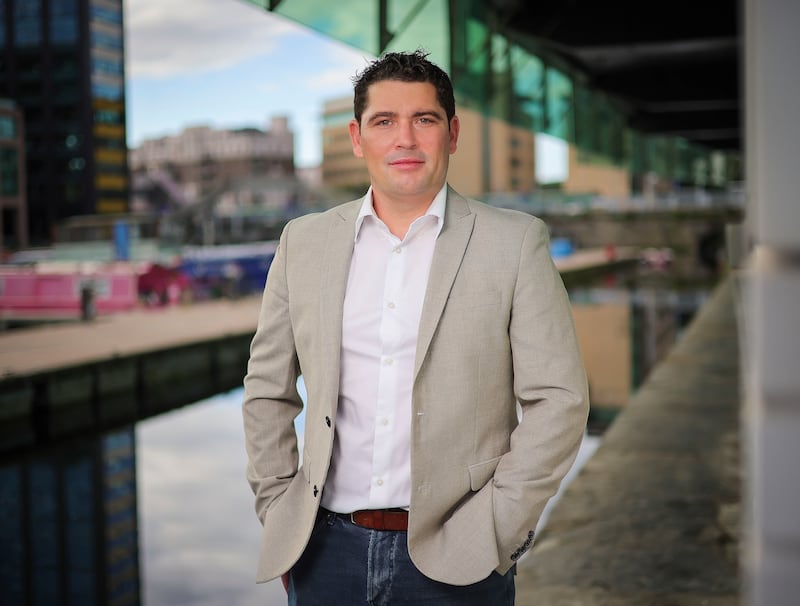
Christopher Paye, country director of the Stepstone Group, which owns IrishJobs.ie, says employers are having to “look beyond” the quality of a written application when assessing whether a candidate is the right person for them.
“AI can make hiring faster and more efficient,” he says. “But human judgment remains critical to understanding candidates, assessing fit and ensuring recruitment is fair and personal.”
Paye says Irish employers have significantly increased their emphasis on the final in-person interview stage. According to research carried out by the group, more than 70 per cent of Irish companies have increased their focus on the classic interview – with around one in five increasing the amount of candidate testing they use.
“This points towards a more holistic approach to assessment, with greater emphasis on interviews, demonstrated skills and practical evaluation,” he says.
“Employers that get that balance right will be better positioned to attract talent while maintaining trust with candidates.”
Keevans agrees that employers also need to be aware that candidates are concerned about the role of AI – and are less inclined to apply for jobs where they believe there will be a lack of human interaction with recruiters.
Research carried out by Morgan McKinley shows that this is particularly prevalent among Irish workers – compared to those in other countries.
“Thirty five per cent of Irish respondents said they would be significantly less likely to apply for a job where an employer was using candidate screening – compared to 23 per cent globally,” she says.
This distrust of AI could mean that the fake-person interview could be slower in arriving here, says Keevans. While US tech companies might be keen on the idea, she sees signs that they are aware of the “nuances” that apply in the Irish market.
Meanwhile, many graduates are having to become less discerning about the roles they are willing to accept.
Keevans says that while AI may have eliminated or “reframed” some entry-level jobs, there are new opportunities opening up in less glamorous areas such as construction and infrastructure.
As for David, he is still knee-deep in the application process as the end of his master’s degree – and the world of work looms.
“At this stage I’d just love to get my foot in the door somewhere,” he says. “I’d be happy with that.”