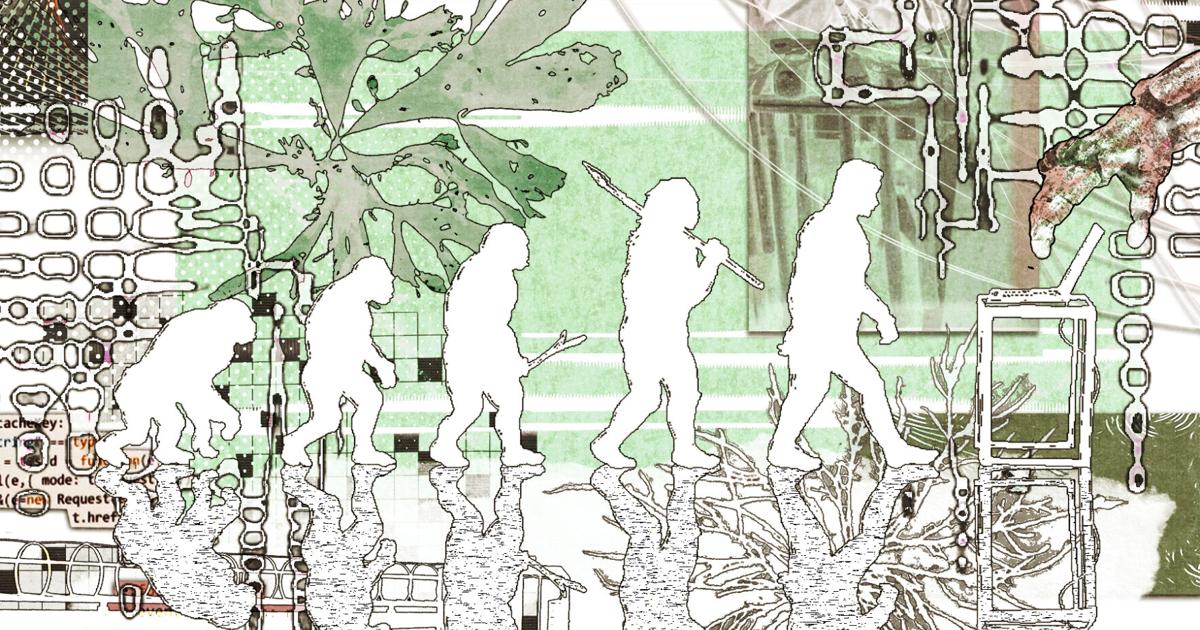
As AI is increasingly used by companies worldwide, some members of the Western community are worried about job security.
Concerns about artificial intelligence replacing jobs have grown as the Canadian labour force dropped 84,000 jobs in February — 3,100 of those in London, Ont. — with the unemployment rate trickling up to 6.7 per cent.
Mark Daley, Western University’s Chief AI Officer, said that while some jobs remain “fundamentally human,” including governance and management, others have traits that are easy for AI to replicate.
“The more your job involves sitting at a computer, not interacting with people, the higher the risk that it’s going to be automated,” he explained.
In a post on X, Jack Dorsey, the CEO of Square, Inc. — a company that provides financial and merchant services and mobile payment hardware for businesses — announced that they would be laying off nearly half their workforce, going from over 10,000 people to just under 6,000.
Dorsey said the decision was not a result of financial pressure, but rather the reality that AI tools combined with smaller teams allowed the company to do the same work with fewer employees on payroll.
This also comes in the wake of J.D. Power, an American software company, rescinding 25 co-op offers from Western students for the upcoming summer. The company cited similar reasoning to Dorsey.
William Turkel, a history professor specializing in computational and tech history, explained that society will continue to see layoffs across various sectors.
“I am also certain that some of those decisions will be successful and some will not,” he wrote in a statement to the Gazette.
Turkel also outlined how mass layoffs succeed when a company cuts out the “informal shortcuts” people used to get work done. This ensures all activity happens within a company’s standardized, trackable systems rather than through personal workarounds.
Long-term job openings have seen a significant decrease since 2023, reminiscent of the COVID-19 pandemic era London saw an 11.2 per cent dip in vacancies in Q3 of 2025.
A report published by Anthropic — the parent company of Claude AI — revealed in March which industries utilizing Claude in their workspaces see tasks already being completed by AI. These included computer programming, market research, medical record management, customer service and data entry.
According to the report, the least-impacted professions are those considered to be “blue-collar,” such as cooks, motorcycle mechanics, lifeguards, bartenders, dishwashers and dressing room attendants.
Daley said that some blue-collar jobs still remain at risk.
“If your physical labour involves being in a conduit and soldering wires together and never interacting with another human, you are almost as at risk as a person whose job is entirely sitting in front of Excel,” he said.
Daley also outlined how recent advancements in robotics allow automated machines to perform efficient acts of physical labour.
“Advances we’ve made in robotics in the last 24 months are more than I thought I would see in my entire lifetime,” he said.
Tyler Oakes, a first-year BMOS student, said he’s reconsidering his career in accounting due to worries over AI replacement.
“I’m concerned about AI replacing basically everything I do, the entire profession. I feel like it would be more secure to pursue a different major, like finance or something along those lines, because it’s more intuition and personality-based,” he said.
Turkel outlined that people “undervalue physical presence,” drawing upon sudden appreciation for front-line healthcare workers during the COVID-19 pandemic.
“For any kind of career, we now have to think about the parts of various tasks that can be automated, and the parts which require physical presence, or a situated perspective — or human abilities that complement AI,” he wrote.
“Specialization and automation long predate AI, of course. The 21st century is so complex and interconnected that our only hope of understanding any part of it is to embrace tools that let us get an overview of larger systems.”
Daley said there is an opportunity for new doors to open where others close.
“Running your own company with an army of AI agents around you all of a sudden becomes a lot more tenable than it was before,” he said. “The opportunity for a solo founder to create a high-value company all of a sudden is opening up.”
While he’s optimistic about the potential for new job creation, Daley affirms that the bottom line is the importance of the human aspects intertwined with labour.
“Do I want a robot journalist? I really don’t. I want a human telling me the story. That’s kind of the point,” he said.
While advice for what the best jobs to pursue continue to spark conversation, Daley underscored how we rarely know what’s to come in the future.
“More so than ever, follow your passion,” he said. “Anyone who wants to tell you, ‘here are the five jobs that will be the best jobs in the future,’ I don’t believe them, because the future is pretty uncertain right now.”