The main selling point of AI is to put people out of work: Its purpose is to let businesses make the same amount of money while employing fewer workers.
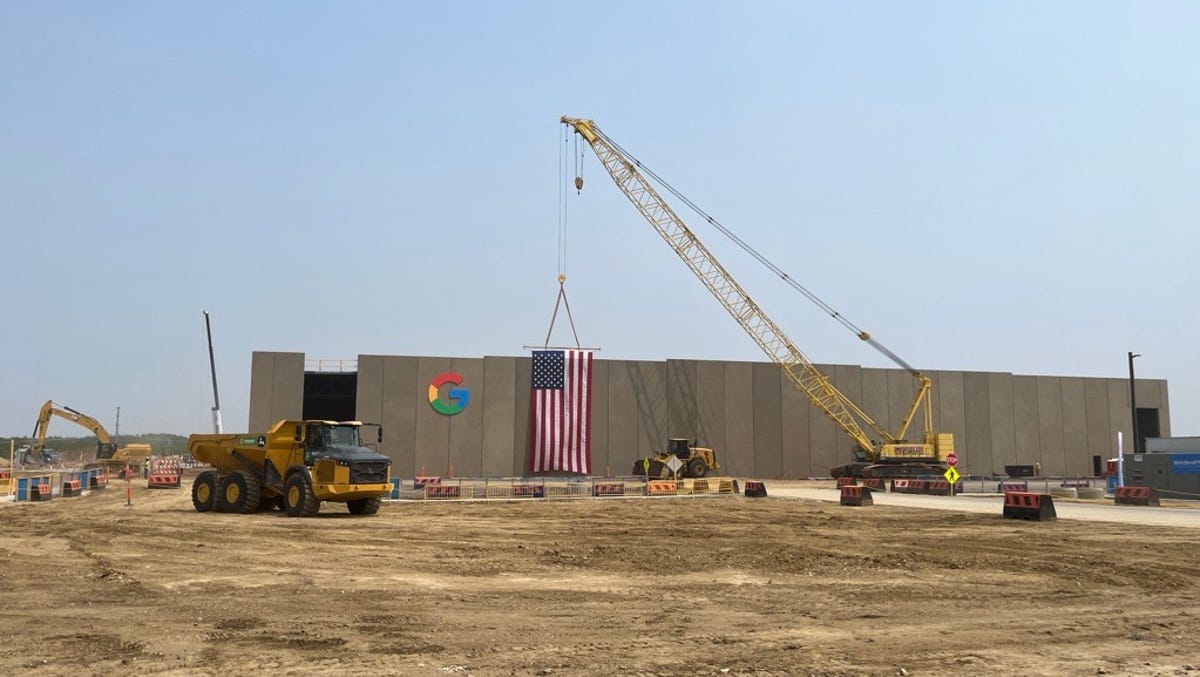
There’s big money in building data centers, specifically big money for businesses like the Des Moines construction firm The Weitz Co. But what’s in it for the rest of us? Ryan Lamb from Weitz argued in an April 5 Register opinion piece that data centers offer a better future for all of Iowa. They don’t.
Lamb presented some numbers and they sound big. He said each data center build employs 500 construction workers over the life of the construction, with a current total of 9,000 people employed. Is 9,000 a big number? Nine thousand pennies is only $90. Ten thousand people in Iowa work as cooks, according to recent data from Iowa Workforce Development. Eighteen thousand people wait tables. Twenty-four thousand work in fast food. Now, construction jobs generally pay better than all of those jobs. (Maybe Iowa could raise wages in the restaurant industry! That would help more people than are helped by data centers.) Data center construction creates fewer jobs than the restaurant industry creates for cooks alone, or for wait staff alone. The federal Bureau of Labor Statistics estimated that at the end of last year there were about 1.7 million Iowans in the workforce. Nine thousand is a tiny fraction of 1.7 million. My point is that if we look at data center construction in the big picture, it turns out that we’re not really talking about that many jobs.
Now, I’m from a family of construction workers, so I do value construction jobs. But how long do data center construction jobs actually last? Lamb says a project employs 500 construction workers “from start to finish” but he doesn’t say how long “start to finish” actually is. The business law firm Avisen states that the construction of a data center takes from one to three years. This suggests that those 500 jobs per project are pretty short-lived. And that’s if those 500 jobs exist for the entire project, which isn’t clear. After all, once the plumbing is finished in a project, the plumbers’ work is usually done.
Lamb claims that data center construction can provide “a high-value industrial base,” but all of his emphasis is on temporary construction jobs. He doesn’t mention how many people are employed at a data center after it’s built. That’s probably because it takes very few people to operate a data center.
The Financial Times journalist Sarah O’Connor looked into claims about data centers creating jobs in the United Kingdom and found that data centers there were projected to produce about 40 jobs each after construction ended. A report by the state of Virginia estimated that a 250,000-square-foot data center employs 50 people, generally speaking. Forty to 50 jobs per facility means each data center would foster “a high-value industrial base.” That makes sense, since data centers are basically big, air-conditioned warehouses empty of people and full of computers humming away doing work automatically. They make practically no positive contribution to our state’s future.
It’s not just that data centers offer little to anyone besides the already wealthy. They actively threaten the future of most ordinary Iowans. Nicole Greenfield, an investigative journalist for Consumer Reports, points out that last year U.S. electricity prices rose faster than inflation. Data centers are part of the reason why. “More data centers can mean higher costs,” Greenfield writes, adding that “areas with high concentrations of data centers saw electricity prices jump 267 percent over the past five years.” That’s due to simple supply and demand. Data centers use a huge amount of electricity. That increase in demand raises prices. So building more data centers will create few jobs while increasing my and your utility bills.
Another downside is water use. As Greenfield notes, a data center can consume 5 million gallons of water per day. That means just one data center can use about as much water as 16,000 families. Iowa has serious water issues as it is, sometimes leading to ordinary Iowans being asked to voluntarily reduce water use. Water-guzzling data centers will worsen these problems. A recent report by Virginia Commonwealth University researchers found that data centers in Virginia are a significant source of air pollution as well. Iowa doesn’t need worse air quality on top of our rising cancer rates.
Finally, the push to build data centers is mostly about having enough computing capacity for tech companies to offer artificial intelligence services. The main selling point of AI is to put people out of work: Its purpose is to let businesses make the same amount of money while employing fewer workers. This means that if data centers spread, even though there will be some new construction jobs in the short term, the long-term result will be more job losses overall. We can stop that, or at least slow the process, if we prevent or reduce the building of more data centers. At the very least, building more data centers like Lamb advocates would amount to pressing the gas pedal to speed us toward an even worse future for lots of ordinary Iowans.
The science fiction writer China Mieville once said that we currently live in a utopian society, specifically a utopia for the very wealthy. The role for ordinary people within that utopia is mostly to be servants who struggle to get by. (Between mediocre pay and rising costs, I’m not sure if I’ll ever be able to afford to retire. How about you?) Data centers are part of this pattern. They offer a good future for the wealthy people who own construction businesses, and they offer an amazing future for the obscenely rich people who own big tech companies. Those rich people’s good futures come at the cost of a lot of negatives for ordinary people and they offer us very little lasting good. Ultimately, the better future that AI and data centers promise simply isn’t for us. It’s for the already rich.
The small, wealthy minority who control our state’s economy and politics keep getting richer. It’s their utopia, and we live outside it. While they get richer, the rest of us get polluted water, rising cancer rates, and few economic or cultural opportunities. That’s why large numbers of young Iowans regularly leave our state. We need something very different than anything that is currently on offer if the majority of ordinary Iowans are going to have an actually better future.
Data centers won’t help us. They’ll only bring us more of the same ― plus higher electric bills.
Nate Holdren wrote the book “Injury Impoverished” and has written for the Des Moines Register, Little Village, Organizing Work, and Time Magazine. He teaches at Drake University.