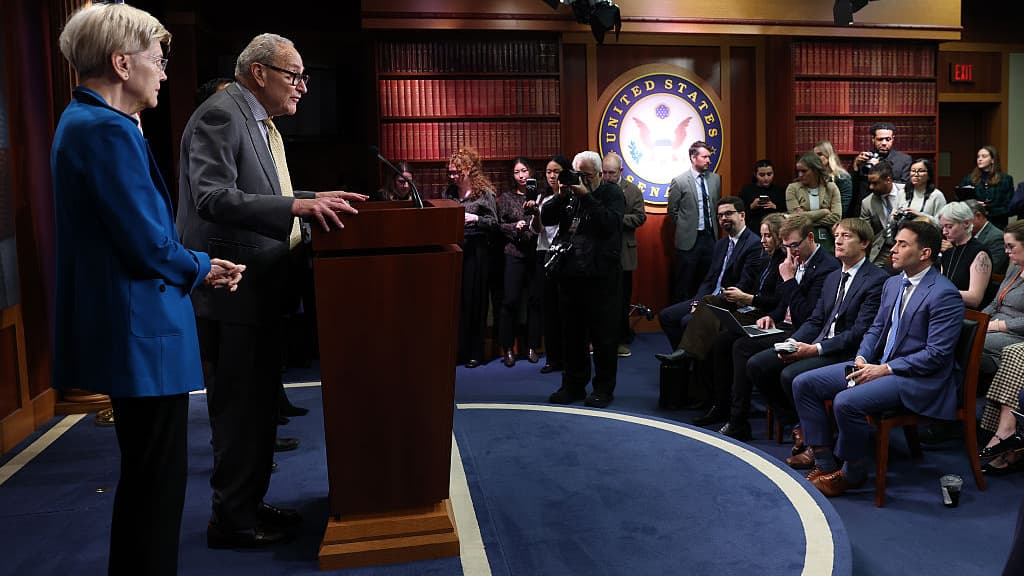
With less than two months before midterms, some members of Congress are feverishly introducing even more AI bills, including at least seven since Coxon’s resignation alone. Other lawmakers are urging their colleagues and congressional leadership to quickly bring measures already on the table for a vote. Democrats, meanwhile, have taken aim at the Trump administration, urging Trump to discuss AI safety with Chinese President Xi Jinping.
“The mood right now, at least in Congress, is very reactive—and I don’t mean that in a good way,” said Suresh Venkatasubramanian, director of Brown University’s Center for Technological Responsibility, Reimagination, and Redesign. “They’re trying to push legislation that seems to address what appears to be a problem coming from the [public] narrative but that doesn’t always necessarily lead to good policy overall.”
In the short term, tech policy watchers have little hope that Congress will pass a major AI safety bill, especially with a limited number of working days left this year. House Speaker Mike Johnson (R-Louisiana ) has rebuffed some Democrats’ calls to end their recess early to focus on an AI bill. Meanwhile, House Energy and Commerce Committee Chairman Brett Guthrie (R–Kentucky), whose committee would review many of the proposed bills, told Politico at an event that the group probably wouldn’t advance a major bill until next year.