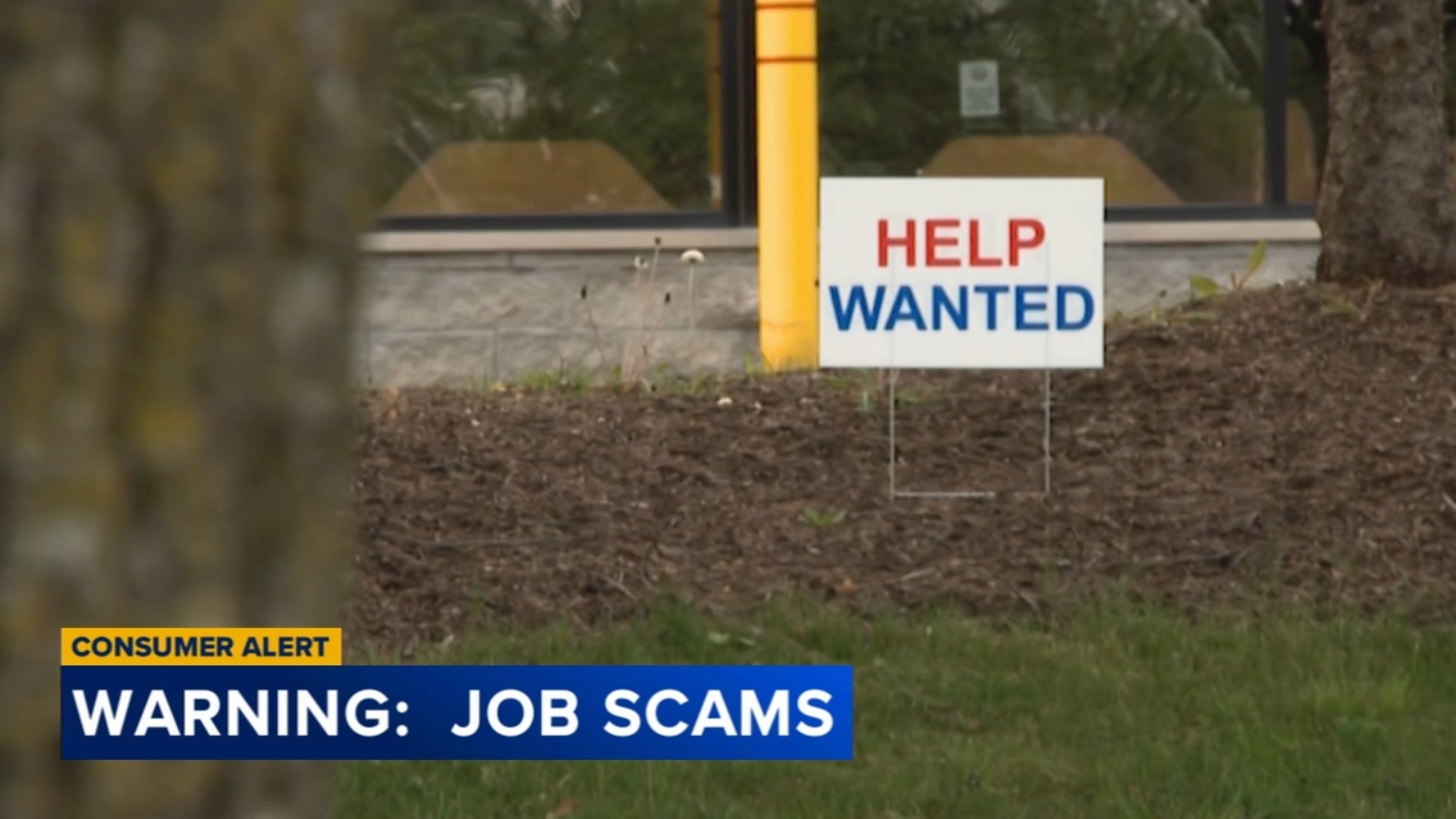
WEST CHESTER, Pa. (WPVI) — Job scams are increasing, and so is the amount of money consumers are losing to them.
Experts warn that increasingly sophisticated schemes can target anyone.
Sarah Booth said she lost more than $20,000 after responding to what appeared to be a legitimate work-from-home opportunity.
“I’ve seen the consumer reports about, you know, the elderly being scammed and whatnot, and I’m just like, ‘No, this cannot be happening to someone like me,'” Booth said.
But it did.
Booth said the scam began with a text message she received after searching for jobs on ZipRecruiter.
“She has this opportunity, it’s work from home, like very flexible hours, great pay,” Booth said, describing the offer.
According to Booth, the message claimed to be from ZipRecruiter and advertised a job reviewing products online for a commission.
She said the operation appeared legitimate.
“They had a customer support hotline. They had marketing material with ZipRecruiter’s logo,” Booth said. “It looked legit.”
Booth said the company used a pay-to-earn structure. She said she initially earned more than $1,000, but the arrangement eventually became what she described as a pyramid scheme.
“And that’s when I started losing money,” Booth said.
Top Stories
Looking back, she said there were warning signs.
“There were many red flags, but I was like, ‘OK, but they’re giving me, I am getting paid, and I am in a group chat with other individuals that are also getting paid,'” she said.
In the end, Booth said she lost upwards of $20,000.
Consumer advocate Herb Weisbaum, contributing editor for Consumers’ Checkbook, said fraudulent job postings can appear anywhere legitimate job opportunities are advertised.
“You will find bogus job ads anywhere there are real job ads,” Weisbaum said.
He added that artificial intelligence is making it easier for scammers to create convincing schemes that appear connected to legitimate companies and individuals.
“You need to make sure a recruiter is really a recruiter; you need to make sure companies really are a company and that there’s really a job there. They can use names of real people, they can use names of companies, they steal their logos, they make it look really legit,” Weisbaum said.
Weisbaum urged job seekers to be cautious when employers request personal information or money.
“Look for the warning signs. They want your personal information up front; they want money from you. If you’re working for somebody, they pay you; you don’t pay them. Period, end of story,” he said.
The Troubleshooters reached out to ZipRecruiter about scammers allegedly using the company’s name but did not receive a response.
Copyright © 2026 WPVI-TV. All Rights Reserved.