When Adam Asad graduates from high school in May, he doesn’t want to go to college. Instead, the 17-year-old plans to abandon “required reading” lists for a hard hat and jump straight into the construction industry.
“They pay well, they have good benefits, and I like building stuff — that’s what I’m into,” he said. “I would like to get right into carpentry.”
In the last year, he’s learned how to use nail guns, sanding belts, table saws, and other tools through building and construction classes (opens in new tab) at San Francisco’s John O’Connell Technical High School. When he gets his diploma, he’ll be eligible for apprenticeships with the carpenters union or local contractors like Cahill, Webcor, and Swinerton. (opens in new tab)
The solid starting salaries (opens in new tab) and potential for a pension are appealing, and the physical nature of the work could be a source of job security.
“Everybody says that construction is an area where AI can’t take over your job, compared to other pathways that you could take in your life,” Adam said. “That feels reassuring.”
The tool-belt generation
Gen Z’s embrace of trade work has grown over several years. Young people’s enrollment in undergraduate certification programs (opens in new tab), commonly offered by trade schools, rose 10.2% from last year, according to a June report from the National Student Clearinghouse Research Center. Vocational school enrollment has increased roughly 20% (opens in new tab) since 2020. College enrollments are expected to drop 13% by 2041 (opens in new tab) (in large part because lower birthrates mean fewer potential attendees, though skepticism about the value of a degree is expected to contribute).
A recent survey of 1,000 young adults (opens in new tab) found that 82% feel the skilled trades offer better job security than office work, while another poll of 1,250 Gen Zers (opens in new tab) found that 60% are “somewhat likely” or more to pursue blue-collar jobs in the future. (Gen Z is generally considered those born between 1997 and 2012.)
“We’re starting to hear Gen Z being discussed as the ‘tool-belt generation,’” said Kit Dickinson, executive at human resources company ADP. “It’s starting to have real meat behind it.” The median age of trade workers (opens in new tab), including carpenters and electricians, has fallen by five years since 2020. The trades could be even more popular if there weren’t so much baggage around blue-collar jobs.
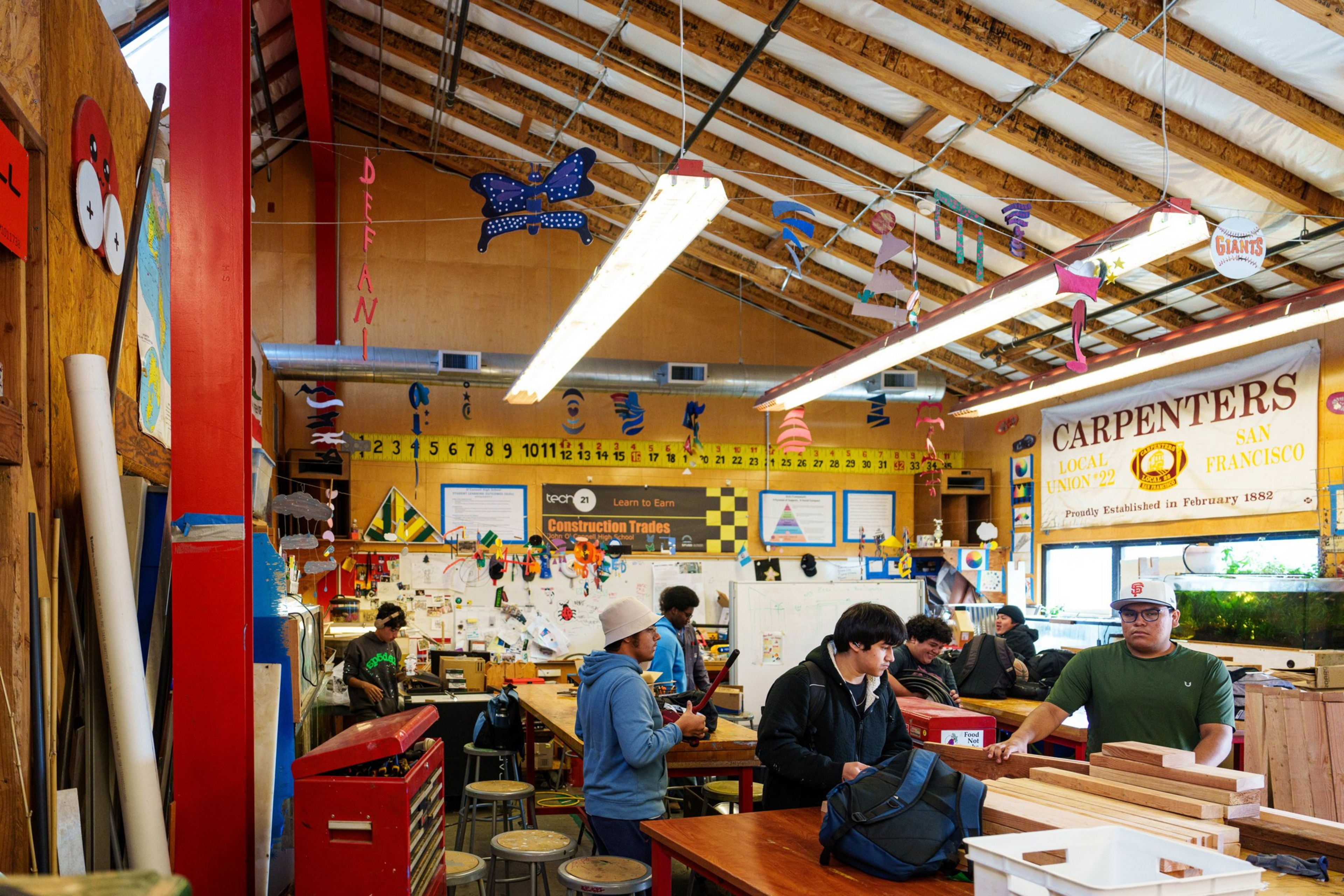
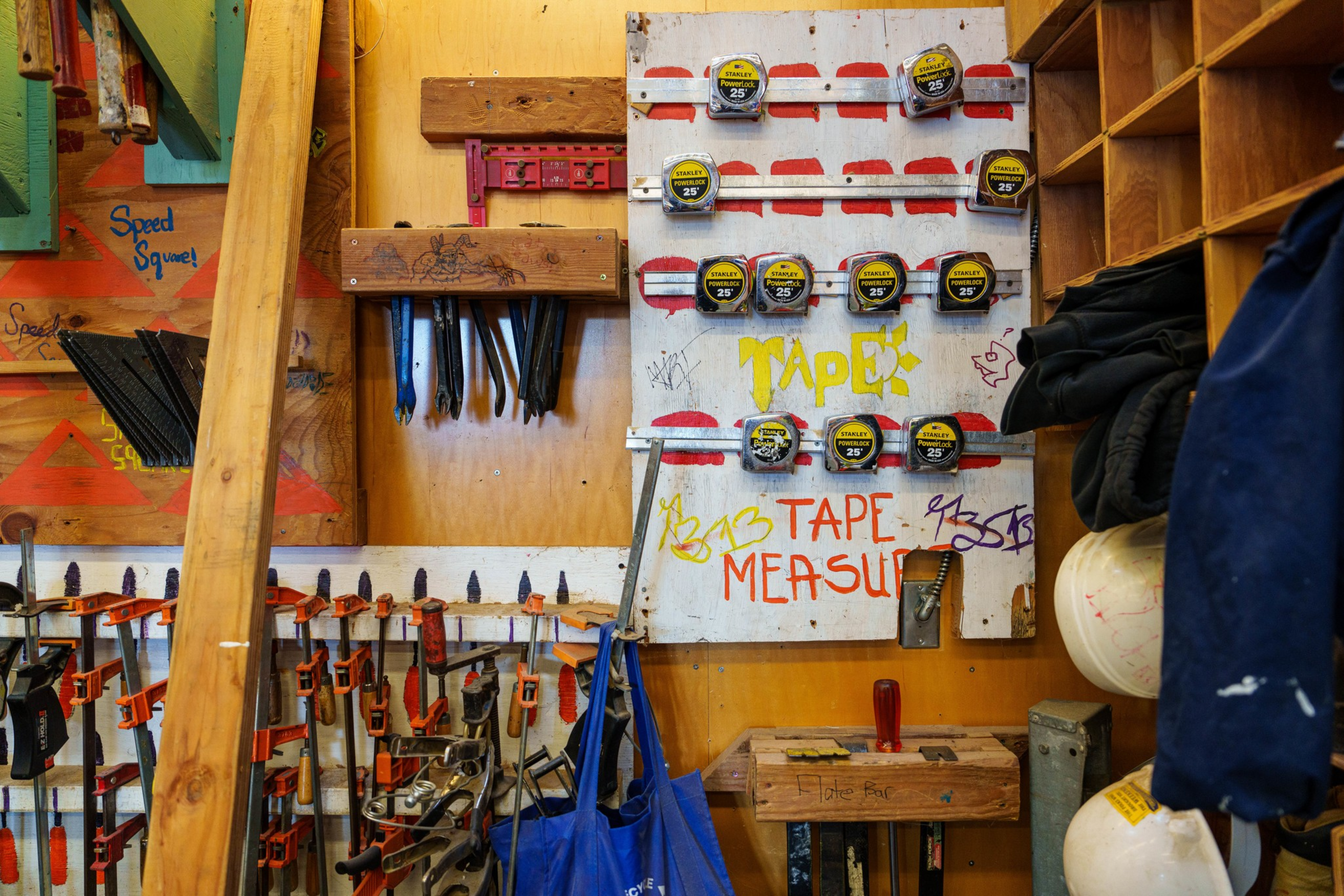
“The industry is really working to reframe the perception of what a career in the trades looks like,” Dickinson said. “There’s a misconception that if you join construction, you’ll be swinging the same hammer for 30 years, when the reality is that the industry has career advancement, lucrative pay, and job stability.”
Office jobs in finance or tech that require degrees have long been marketed as the prized path of upward mobility. But as college tuition soars, without necessarily resulting in jobs related to one’s degree (opens in new tab), more young people are rebelling against that narrative, according to Kelcie Wong, program director at local workforce development nonprofit JVS.
“Young people are doing the math that college is crazy expensive, they could end up in debt, and there’s no guaranteed path to economic mobility,” she said. Training to be a plumber or electrician is far quicker than getting a bachelor’s degree and can include paid learning. Many practitioners become entrepreneurs, she said, running their own auto shops or contracting businesses.
“They have this pathway to economic mobility and some of the stability that white-collar jobs used to afford you.”
JVS recently shut down its program to train tech workers, she said, because of the dramatic decline in entry-level hiring. Now it funnels its resources into its other two programs: healthcare and skilled trades.
The automotive program once trained five to 12 people a year. Thanks to an investment from the city’s Office of Economic and Workforce Development, there are 55 students working under the hood this year, with plans to expand to 70. The programs are open to people of all ages, but half of the 110 recent applicants were Gen Z.
One recent JVS graduate, 23-year-old Isaia Butler, joined the program after dropping out of San Jose State University. He had studied biomedical engineering but decided that piling up student loans to enter a foreboding job market didn’t add up. He opted for a paid opportunity to learn to repair vehicles. “The automotive trade feels safe right now,” he said.
He completed an apprenticeship at Muni through JVS, then landed a job at O’Reilly. He plans to open his own auto shop one day, he said.
“We often hear that people feel like it’s a more durable career,” said Wong. “Because it’s hands-on, it’s much more insulated from automation risk. It’s very human.”
CityBuild (opens in new tab), an OEWD program which provides construction training and pre-apprenticeships to SF residents, has seen the average age of its participants drop from approximately 31 to 27 over the past five years, according to spokesperson Benson Tran. “These are the workers who will build our housing, improve our infrastructure, and shape the future of our city.”
Paulo Makalinao, who runs the Bay Area Workers Club (opens in new tab) Instagram and TikTok accounts for job board Bandana, said his most popular videos are about electricians (opens in new tab) and ironworkers (opens in new tab). Each has hundreds of thousands of views. “A lot of the comments are people saying, ‘How can I learn more?’” he said.
Pageviews on Bandana’s job board for apprenticeships or trainee jobs have spiked 400% since last year, he added. Once, while filming at a training center, he met someone who scored an apprenticeship after watching one of his videos. “These opportunities are changing people’s lives,” he said. “These are the kinds of jobs that allow people who were born and raised in the Bay Area to continue to live here.”
Money talks
Chris Wood, the aptly named construction teacher at the San Francisco Unified School District for more than 15 years, said career and technical education programs are filling a need.
“There’s a ‘silver tsunami’ of old people who will be retiring from trades positions,” he said. “The industry wants to help, because they need people. They’ve got to have a skilled workforce, and they’re starting to feel like there’s a pinch.”
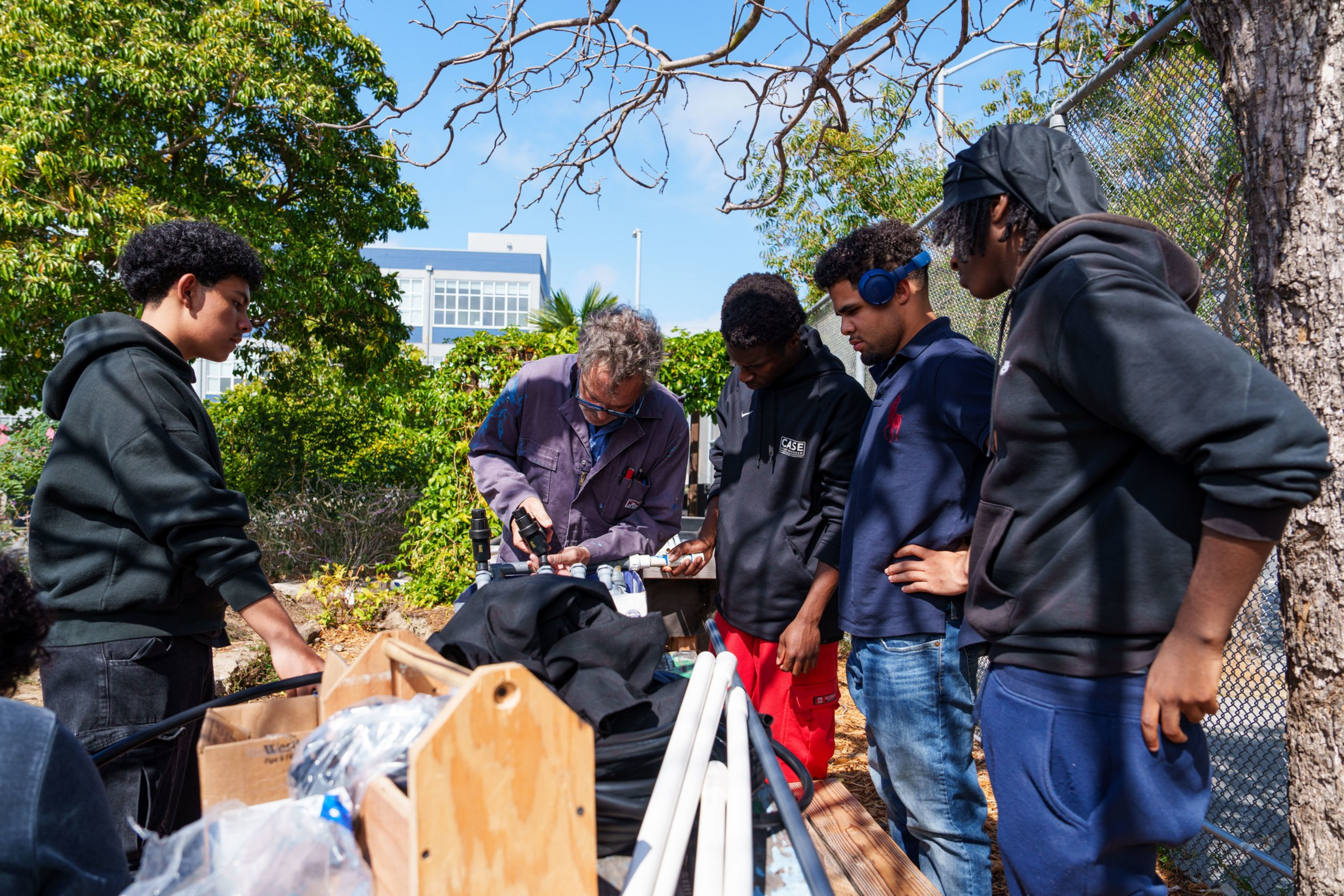
His program has received investment from the district and the private sector. Local companies donate equipment and time to his students. He has noticed a modest increase in interest in trade work from high schoolers over the past few years, and he’s trying to boost awareness of the benefits. “I hear adults talking about it a lot. The kids, not as much.”
Another strategy he’s using to attract students is emphasizing the money. He leads field trips to job sites around the city and encourages them to ask about the pay. When they hear from journeymen earning six-figure salaries who own homes in the Bay Area, it gets their attention, he said. “They know the dollars are out there, and that sticks.”
When Adam told his friends and father his plans, they were proud of him and optimistic about his roadmap, he said: “It can set you, and a family that you may have, up for the future.”
Wood hopes another takeaway for students is that creating something in the real world — not just on a computer screen — is the best part about working in construction.
“I’ve had white-collar jobs, but nothing is as satisfying as generative work: building something and knowing that you did it,” he said. Getting to look back at a city and knowing that you changed the skyline is more powerful even than a full bank account. “That’s what most tradespeople will tell you.”