Joshua Carroll entered the tech world as a “bright-eyed and bushy-tailed” product manager at Microsoft.
“I was really excited about the mission of the company,” Carroll said.
Now in his late 30s and working as a product manager at Google, the self-identified cat dad said that he kept politics out of the office until 2023 — when Israel launched a full-scale military campaign in Gaza, using Google technology.
There were “things in the industry I wasn’t totally stoked about, but I hadn’t really been super engaged around them as a worker,” Carroll said. After seeing “what Google and Amazon were doing to support the genocide in Gaza,” Carroll said he started trying “to improve the industry and how my work was being used.”
He decided to join the Tech Workers Coalition, a group fighting for “better working conditions and a real say in how the technology [they] build impacts our communities and the world,” according to their website.
Since joining, Carroll said the Bay Area chapter has focused on building “worker consciousness” among tech workers and connecting them to advocacy campaigns around issues that the industry has an impact on — from Flock cameras to artificial intelligence.
For decades, high compensation, strong upward mobility and a culture of individual achievement have helped keep Silicon Valley’s white-collar workers largely detached from organized labor. But as artificial intelligence rapidly changes the nature of technical work, organizers say more tech employees are reconsidering their position in the industry, and following in the footsteps of labor organizers past.
AI anxieties
While some tech workers are wondering how they’ll spend their IPO windfalls, others are experiencing all too familiar AI anxieties: Will AI change our jobs? Will it eliminate them? Will it eliminate us all?
Last month, employees at frontier AI labs Anthropic and Google drew widespread attention to AI safety issues by quitting over concerns that their companies cannot control the technology.
Carroll said he does not discount AI’s existential risk, but he remains more concerned by its “immediate and material harms in terms of labor displacement and social impacts and environmental impacts and surveillance and weaponization — all the things that are happening now.”
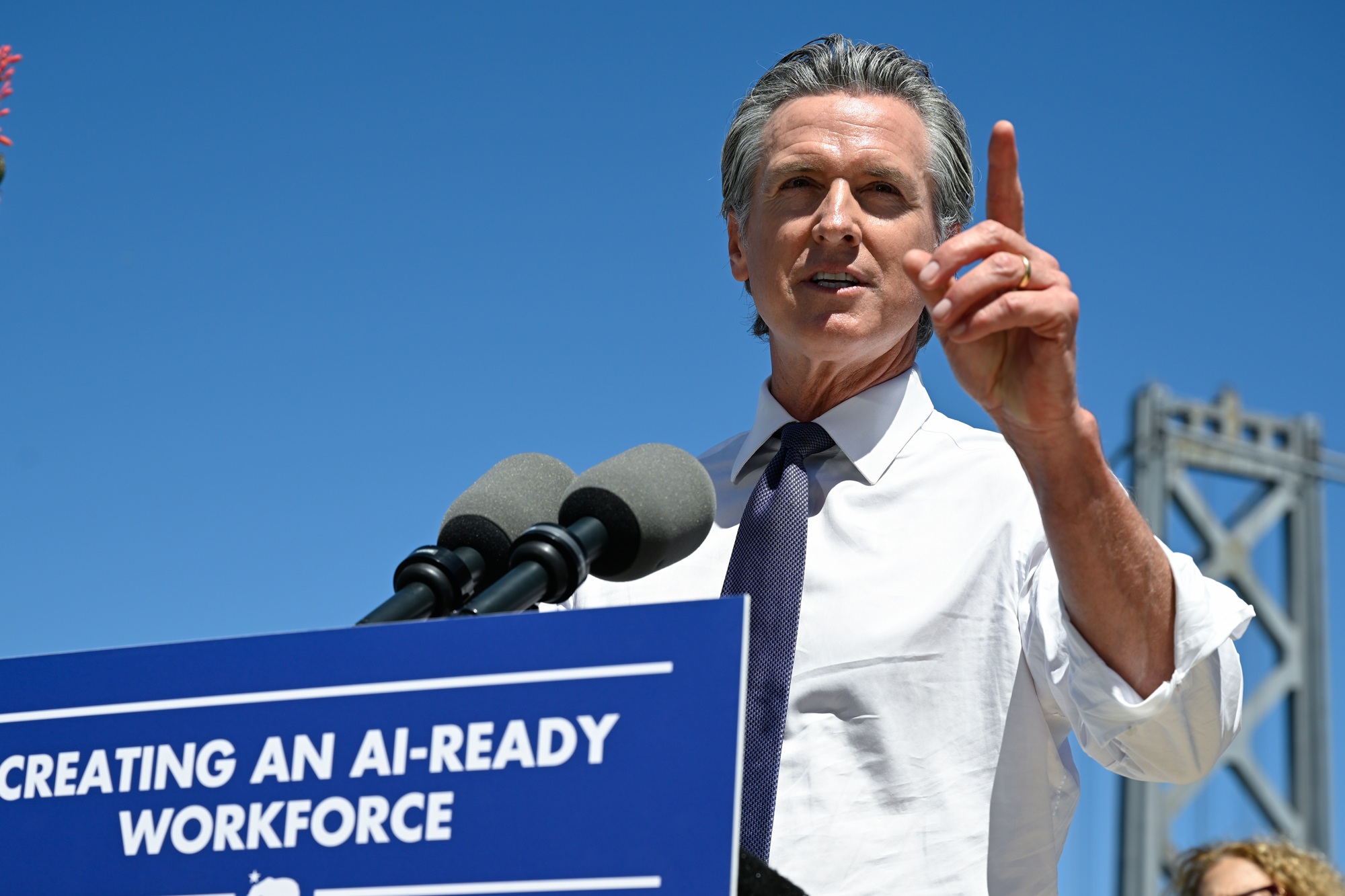
Jeremy Bernick, an Arizona-based attorney and member of the Communications Workers of America, a national union that represents workers at Alphabet and Wikimedia, said they are worried about senior management pushing AI onto junior employees.
“A lot of us are thinking, no, it actually degrades or slows down our work processes,” Bernick said.
Bernick said there’s some fear that companies will use “token tracking,” a method to see how often each employee uses AI, and other forms of surveillance as part of performance reviews.
As these concerns grew, Bernick said that CWA formed an AI advisory committee and has released an AI bargaining toolkit for workers. In September, white-collar workers at Wikimedia voted to form a union, and Blizzard Entertainment ratified their union contract — both drives have mentioned AI usage.
While many engineers have adopted AI into their workflow, others said that AI makes their previously creative and intellectually stimulating job more rote and less impactful.
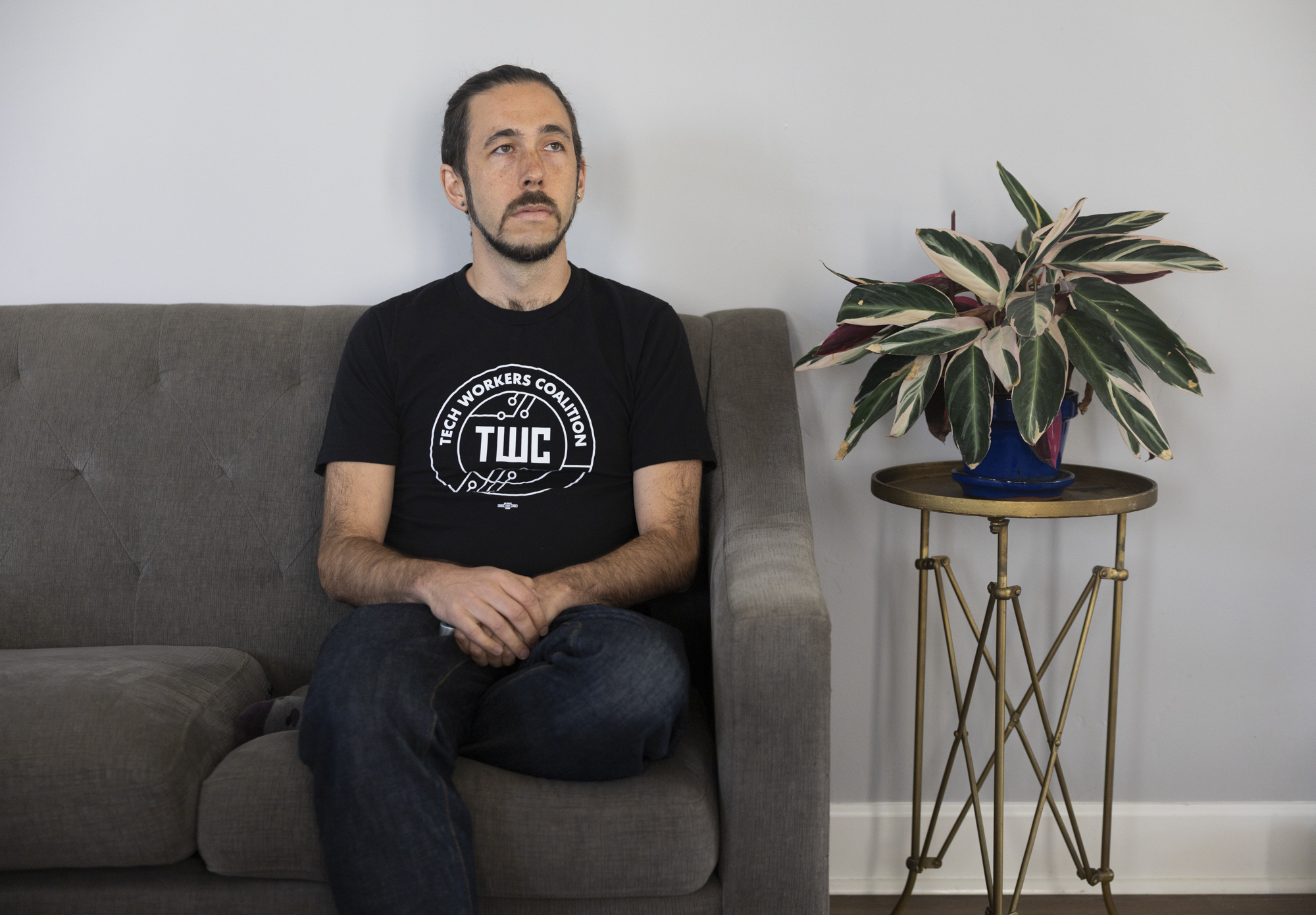
“We can see how our control and influence over actual product decisions — and the impact on society — is likely to degrade and is degrading,” Carroll said. He described a shift from making decisions to “shoveling data” — where workers are asked to put information into AI systems and let the machines do the rest.
This change in the nature of their work and the rapid advancement of AI models has coincided with massive restructuring in the industry.
Already, software companies have laid off tens of thousands of employees, citing a desire to shift spending towards “AI-focused employees and data center construction.” While more employees were laid off in 2023 than 2026, this year saw a rise in layoffs directly attributed to AI, according to layoffs.fyi.
A 2026 AI Index report from Stanford University found that one-third of organizations surveyed anticipate there will be more job reductions in the near future and that employment for entry-level software developers fell 20% from 2024.
“I think this is the first era in recent memory outside of maybe the ‘70s and ‘80s where there’s been a real, legitimate fear of actual labor displacement,” Bernick said. “Unions are a really good way to combat that.”
Political problems
While some tech workers are organizing to protect their jobs, others are turning to collective bargaining as a way to challenge their company’s political decisions.
Alex Samburov, a member of the Alphabet Workers Union, has been organizing the Googlers Against ICE Campaign, which opposes their employer’s partnerships with the U.S. Department of Homeland Security, Customs and Border Protection and Immigration and Customs Enforcement. The campaign specifically calls out the use of AI by federal agencies for “workforce enablement” and “improving operational efficiency,” among other tools, according to the petition.
Samburov, a Russian immigrant, said he joined Google in 2019 right after the tech giant canceled a contract with the Department of Defense for Project Maven — a U.S. program that uses AI to help drones distinguish between people and objects — following pressure from employees.
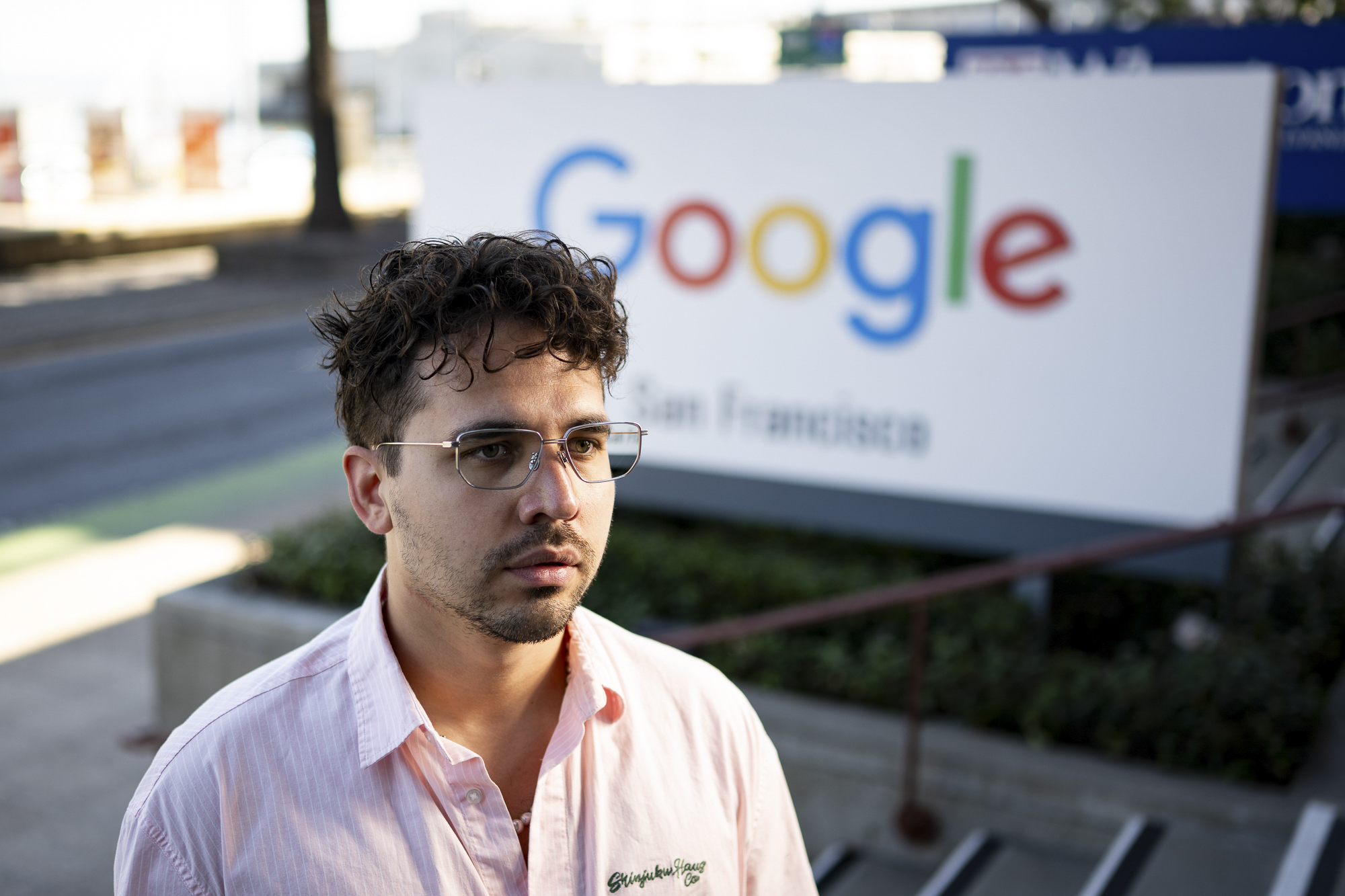
“That’s the company culture that attracted me to Google,” Samburov said. “Every day I meet more people who care about these issues, meet people who are willing to risk their employment. Some of them are willing to take a risk despite being immigrants like myself.”
Samburov said that workers within Google have the most leverage to change the company. He said that creates an obligation to check how the company uses his labor.
“We have seen Google demonstrate that the organization doesn’t care about much else. Users don’t really have leverage in this relationship and American voters don’t seem to have much leverage either,” Samburov said.
The campaign reached 1,700 signatures last month and has since been formally endorsed by the union. Google declined to make anyone available to comment.
But organizing around these political and ethical questions has become more difficult as layoffs make workers feel more vulnerable, Carroll said. Unions can be helpful here, he said, because they can provide the structure, protections and democratic processes to help workers advocate.
The workers are the ones building and maintaining the internet, AI, social media and everything in-between, Carroll said, but a lot of decisions are being put on them from the top down.
“If we can come together to see a different direction … there’s a lot of power there,” Carroll said.
Silicon Valley’s long history of resistance to unions
The idea of tech workers organizing collectively is still unusual in Silicon Valley.
The Alphabet Workers Union, one of the most prominent tech unions, represents “over a thousand” employees out of roughly 190,000 employees and is not yet registered with the National Labor Relations Board.
Nationally, just 3.7% of workers in “computer and mathematical occupations” are unionized, compared to 10% of workers across other industries according to the Bureau of Labor Statistics.
Margaret O’Mara, a historian and author of The Code: Silicon Valley and the Remaking of America, said that disparity has deep roots. Silicon Valley companies gave their white-collar workers incentives to negotiate with management directly, rather than at the bargaining table. And at the same time, Silicon Valley companies developed aggressive strategies for keeping their workplaces union-free.
While U.S. union membership peaked around 1950 — with over 30% of the American workforce carrying a union card at the time — O’Mara said that the management in the Valley was “pretty strongly anti-union.”
“From Hewlett-Packard forward, there was an idea that if you had a union in your company, that was a sign that management was doing it wrong,” O’Mara said.
Founded in 1939, Hewlett-Packard pioneered some of the systems that keep tech employees aligned with their management even today, O’Mara said, such as stock options.
Bacon also said he and other union organizers were fired and blacklisted.
The result was a workplace culture in which unionization could seem unnecessary, or even antithetical to the work, for some and dangerous for others.
Carroll said that talking to his coworkers about unionizing today often involves a lot of education.
He often has to explain to them, he said, that “it would be illegal for the companies to retaliate or discriminate against us for [organizing around working conditions].”
The future of AI workers?
As organizers like Carroll, Bernick and Samburov push for unionization, some experts question whether the current wave of AI and political anxiety will translate into meaningful union drives.
Lenny Siegel, former mayor of Mountain View and a longtime activist, said that he does not believe AI alone will push tech workers to unionize.
Unless the AI bubble pops, Siegel said he is “not expecting people [in Silicon Valley] to have trouble negotiating individually for bread and butter issues.” Without the need to collectively bargain, unionization is unlikely — especially given the high concentration of tech employees on H1B visas who risk losing everything if their company decides to retaliate.
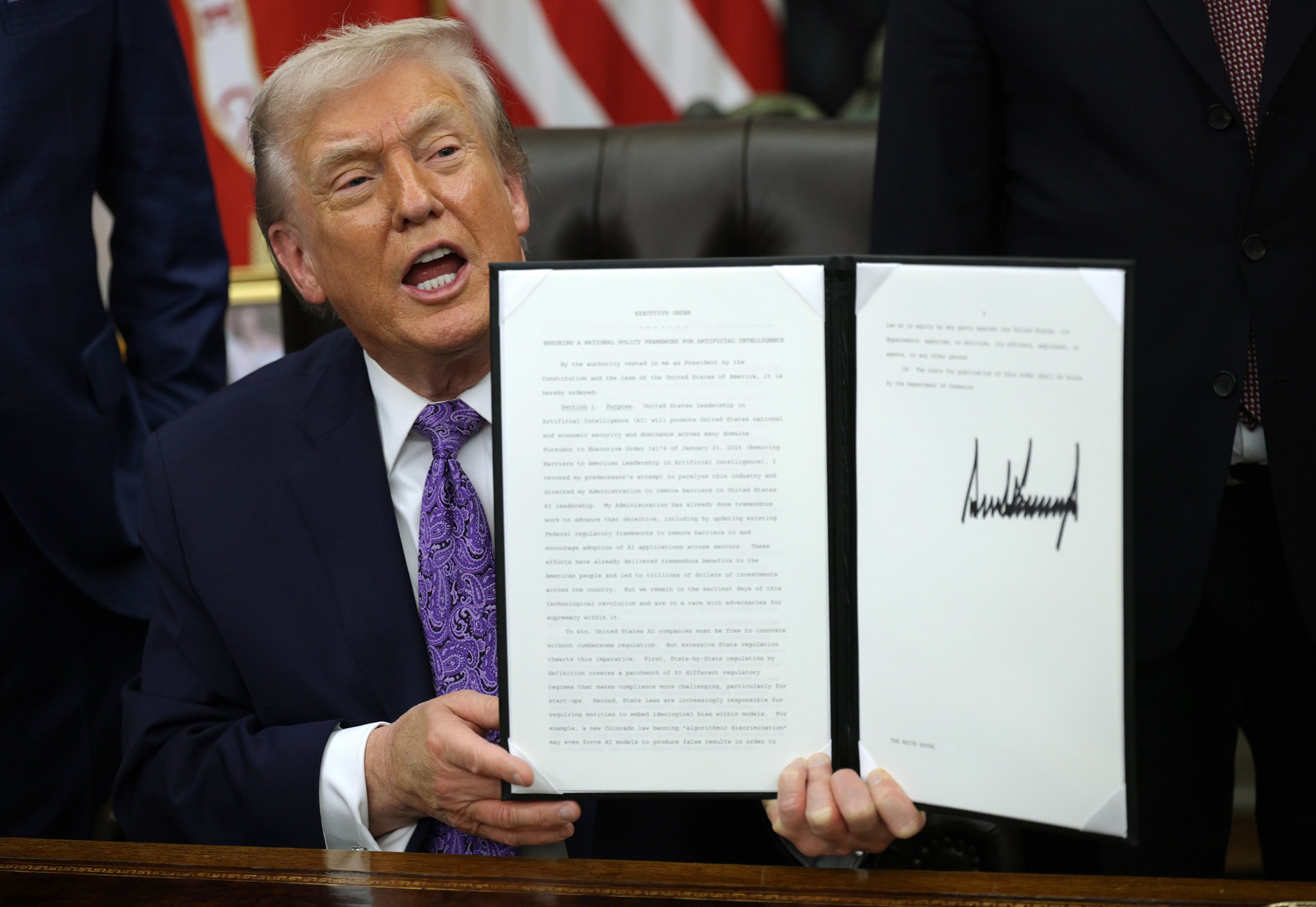
While Siegel does not believe he’ll see software engineers on the picket line anytime soon, he agrees that organizing around political issues will continue.
“There have always been progressive tech workers in the Valley,” Siegel said.
In the ’90s, Siegel belonged to a group called Computer Professionals for Social Responsibility, which he described as a “collection of tech professionals who got together and effectively, because of their expertise, had an impact on policy.”
The group formed in 1981 and opposed the use of computing technology for military applications, including the Strategic Computing Initiative, an early artificial intelligence project funded by the Department of Defense.
While political engagement among techies may not be new, Carroll said building power within the workplace helps give workers the security they need to speak out.
“We need to feel like our jobs are safe in order to feel comfortable working on and talking about some of these other issues,” Carroll said.
For Carroll, the effort to build solidarity with his coworkers and colleagues across the industry has been worth it, even if it moves slowly.
“Labor organizing and trying to directly create power against the people at the top that are making a lot of the decisions is one of the most impactful things that we can be doing,” Carroll said.